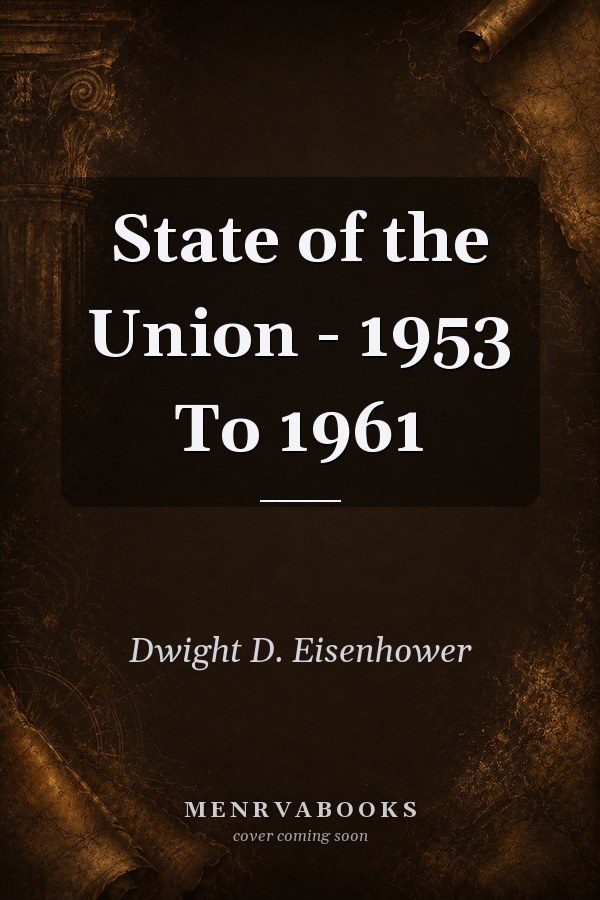
State of the Union - 1953 To 1961
0
0
As an Amazon Associate and affiliate partner, Menrva Books earns from qualifying purchases. Learn more
Author Description
He shall from time to time give to the Congress information of the state of the Union... The Constitution of the United States, under the above words in Article II Section 3, require the President to give a State of the Union message to the Congress from time to time on no set schedule. Tradition has made this a yearly message from the President to Congress. The message now is made in a speech by the President before Congress, George Washington and John Adams delivered the message in person. Then for more than 100 years after this the message was delivered and read in the Congress. Since Franklin D. Roosevelt, Presidents have delivered the message in a speech before Congress. The State of the Union usually has an important influnce on public opinion. It has been used to bring forth important policy positions such as the Monroe Doctrine. The State of the Union messages in this compilation are from Dwight D. Eisenhower.
Menrva's Summary
THE THESIS
The State of the Union messages from Dwight D. Eisenhower's presidency are compiled to document key policy positions and their influence on public opinion. This collection presents the official addresses given by President Eisenhower to Congress between 1953 and 1961, fulfilling the constitutional requirement to inform the nation. These speeches historically served as a platform for significant policy announcements, akin to the Monroe Doctrine, and shaped public discourse during a critical period of American history. The compilation offers insight into Eisenhower's vision for the nation during his two terms.
THE SCOPE MAP
- State of the Union messages delivered by President Dwight D. Eisenhower.
- Messages span the years 1953 to 1961, covering Eisenhower's two terms in office.
- Contextual information on the historical tradition and constitutional basis of the State of the Union address.
- Examples of how these messages have historically influenced public opinion and policy, such as the Monroe Doctrine.
THE AUTHORITY PERSPECTIVE
This compilation offers a direct look at President Eisenhower's policy pronouncements and vision for America during a pivotal era. The inclusion of historical context regarding the State of the Union tradition provides a framework for understanding the significance of these addresses. The collection is likely to be of interest to historians, political scientists, and students of American presidential rhetoric. It serves as a primary source for examining the articulation of national priorities and policy direction during the 1950s.
Page Count:
113
Publication Date:
2008-01-01
Publisher:
Quiet Vision Publishing
ISBN-10:
1605450553
ISBN-13:
9781605450551
History
Politics
Non-Fiction
Government
Community Tags
Similar Books