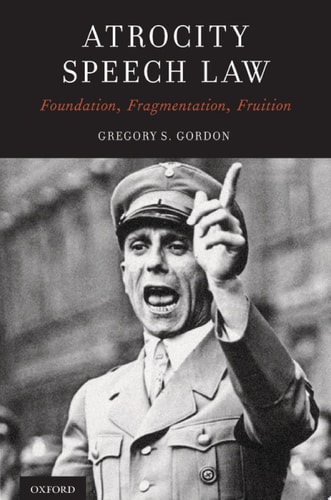
Atrocity Speech Law
0
0
As an Amazon Associate and affiliate partner, Menrva Books earns from qualifying purchases. Learn more
Author Description
The Law Governing The Relationship Between Speech And Core International Crimes A Key Component In Atrocity Prevention Is Broken. Incitement To Genocide Has Not Been Adequately Defined. The Law On Hate Speech As Persecution Is Split Between The International Criminal Tribunal For Rwanda (ictr) And The International Criminal Tribunal For The Former Yugoslavia (icty). Instigation Is Confused With Incitement And Ordering's Scope Is Too Circumscribed. At The Same Time, Each Of These Modalities Does Not Function Properly In Relation To The Others, Yielding A Misshapen Body Of Law Riddled With Gaps. Existing Scholarship Has Suggested Discrete Fixes To Individual Parts, But No Work Has Stepped Back And Considered Holistic Solutions. This Book Does. To Understand How The Law Became So Fragmented, It Returns To Its Roots To Explain How It Was Formulated. From There, It Proposes A Set Of Nostrums To Deal With The Individual Deficiencies. Its Analysis Then Culminates In A More Comprehensive Proposal: A Unified Liability Theory, Which Would Systematically Link The Core Crimes Of Genocide, Crimes Against Humanity, And War Crimes With The Four Illicit Speech Modalities. The Latter Would Be Placed In One Statutory Provision Criminalizing The Following Types Of Speech: (1) Incitement (speech Seeking But Not Resulting In Atrocity); (2) Speech Abetting (non-catalytic Speech Synchronous With Atrocity Commission); (3) Instigation (speech Seeking And Resulting In Atrocity); And (4) Ordering (instigation/incitement Within A Superior-subordinate Relationship). Apart From Its Fragmentation, This Body Of Law Lacks A Proper Name As Incitement Law Or International Hate Speech Law, Labels Often Used, Fail To Capture Its Breadth Or Relationship To Mass Violence. So This Book Proposes A New And Fitting Appellation: Atrocity Speech Law.
Menrva's Summary
THE THESIS
This book investigates the fragmentation and legal inconsistencies within the international laws governing speech that leads to core international crimes, such as genocide and war crimes. Gregory S. Gordon, a scholar of international criminal law, utilizes a historical analysis of legal precedents from the ICTR and ICTY to identify systemic gaps in current statutes. He argues that the current legal framework is disjointed and proposes a unified liability theory to systematically link speech modalities with mass violence.
THE SCOPE MAP
What You Will Find
- A comprehensive review of the legal history surrounding incitement, instigation, and ordering.
- A proposed unified liability theory for atrocity speech.
- A new classification framework for categorizing illicit speech in international law.
Scope Limits
- The analysis focuses primarily on international criminal law rather than domestic hate speech legislation.
- The book does not provide a sociological study of the effects of speech on populations, focusing instead on the legal mechanics of prosecution.
THE AUTHORITY PERSPECTIVE
Legal scholars and practitioners view this work as a significant contribution to the field of international criminal law due to its holistic approach to a previously fragmented subject. Readers frequently note the academic density of the prose, which makes it a specialized resource for legal professionals and researchers in human rights.
Page Count:
224
Publication Date:
2017-01-01
Publisher:
Oxford University Press
ISBN-10:
019061269X
ISBN-13:
9780190612696
Criminology
Human rights
International Law
Law
Community Tags
Similar Books