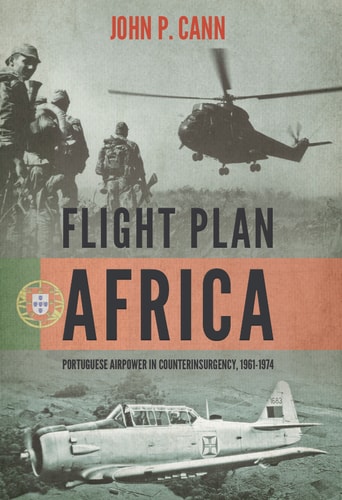
Flight Plan Africa: Portuguese Airpower in Counterinsurgency, 1961-1974
0
0
As an Amazon Associate and affiliate partner, Menrva Books earns from qualifying purchases. Learn more
Author Description
Following the 1952 reorganization of the Portuguese Air Force from the army and naval air arms, Portugal now had an entity dedicated solely to aviation that would bring it into line with its new NATO commitment. As it proceeded to develop a competence in modern multiengine and jet fighter aircraft for its NATO role and train a professional corps of pilots, it was suddenly confronted in 1961 with fighting insurgencies in all three of its African possessions. This development forced it to acquire an entirely new and separate air force, the African air force, to address this emerging danger. This is the story of just how Portuguese leadership anticipated and dealt with this threat, and how it assembled an air force from scratch to meet it. The aircraft available at the time were largely castoffs from the larger, richer, and more sophisticated air forces of its NATO partners and not designed for counterinsurgency. Yet Portugal adapted them to the task and effectively crafted the appropriate strategies and tactics for their successful employment. The book explores the vicissitudes of procurement, an exercise fraught with anti-colonial political undercurrents, the imaginative modification and adaptation of the aircraft to fight in the African theaters, and the development of tactics, techniques, and procedures for their effective employment against an elusive, clever, and dangerous enemy. Advances in weaponry, such as the helicopter gun ship, were the outgrowth of combat needs. The acquired logistic competences assured that the needed fuel types and lubricants, spare parts, and qualified maintenance personnel were available in even the most remote African landing sites. The advanced flying skills, such as visual reconnaissance and air-ground coordinated fire support, were honed and perfected. All of these aspects and more are explored and hold lessons in the application of airpower in any insurgency today.
Menrva's Summary
THE THESIS
This book investigates how the Portuguese Air Force adapted and developed its capabilities to effectively conduct counterinsurgency operations in its African colonies between 1961 and 1974. John P. Cann, a recognized expert in Portuguese military aviation, draws upon extensive research into procurement records, operational reports, and historical accounts to detail the formation and deployment of a specialized African air force. The book argues that despite facing limitations in aircraft and political challenges, Portugal's innovative approach to adapting existing technology, developing new tactics, and ensuring robust logistical support was crucial to its counterinsurgency efforts.
THE SCOPE MAP
- The reorganization of the Portuguese Air Force and its initial NATO commitments.
- The sudden emergence of insurgencies in Angola, Mozambique, and Portuguese Guinea in 1961.
- The acquisition and adaptation of surplus aircraft from NATO partners for counterinsurgency.
- The development of specific tactics, techniques, and procedures for air-ground coordination and reconnaissance.
- The logistical challenges and solutions for maintaining operations in remote African theaters.
- The role of technological advancements, such as helicopter gunships, driven by combat needs.
- Lessons learned from Portuguese airpower in counterinsurgency applicable to modern conflicts.
THE AUTHORITY PERSPECTIVE
This work is recognized for its detailed examination of Portuguese airpower during a critical period of colonial conflict. It is noted for its thorough analysis of how Portugal adapted often outdated equipment and developed novel strategies to combat elusive enemies in challenging African environments. The book offers valuable insights into the practical application of air power in counterinsurgency operations, drawing parallels to contemporary military challenges.
Page Count:
887
Publication Date:
2015-01-01
Publisher:
Helion and Company
ISBN-10:
1910777544
ISBN-13:
9781910777541
Non-Fiction
History
African history
Aviation History
Counterinsurgency
Military History
Community Tags
Similar Books