Understanding Namibia: The Trials of Independence
0
0
As an Amazon Associate and affiliate partner, Menrva Books earns from qualifying purchases. Learn more
Author Description
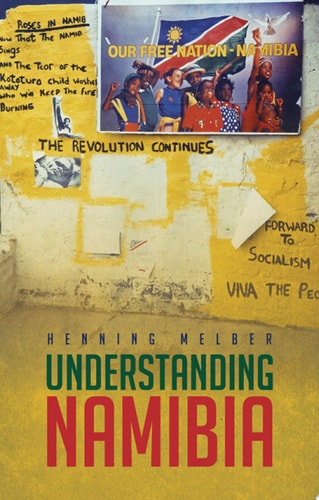
Since independence in 1990, Namibia has witnessed only one generation with no memory of colonialism - the 'born frees', who voted in the 2009 elections. The anti-colonial liberation movement, SWAPO, dominates the political scene, effectively making Namibia a de facto one-party state dominated by the first 'struggle generation'.While those in power declare their support for a free, fair, and just society, the limits to liberation are such that emancipation from foreign rule has only been partially achieved. Despite its natural resources Namibia is among the world's most unequal societies and indicators of wellbeing have not markedly improved for many among the former colonized majority, despite a constitution enshrining human rights, social equality, and individual liberty.This book analyses the transformation of Namibian society since Independence. Melber explores the achievements and failures and contrasts the narrative of a post-colonial patriotic history with the socio-economic and political realities of the nation-building project. He also investigates whether, notwithstanding the relative stability prevailing to date, the negotiation of controlled change during Namibia's decolonization could have achieved more than simply a change of those in control.
Menrva's Summary
THE THESIS
This book investigates the extent to which Namibia has achieved genuine socio-economic and political emancipation since its independence from colonial rule in 1990. Henning Melber, a scholar with extensive experience in Southern African studies, utilizes historical analysis and political critique to examine the gap between the constitutional promises of the SWAPO-led government and the lived realities of the Namibian population. The text argues that while formal independence was secured, the nation-building project remains constrained by persistent inequality and the dominance of the original liberation generation.
THE SCOPE MAP
What You Will Find
- Analysis of the political dominance of the SWAPO liberation movement.
- Evaluation of socio-economic indicators and wealth distribution post-1990.
- Comparison between official state narratives of patriotic history and actual societal outcomes.
Scope Limits
- The text focuses primarily on the political and structural transformation of the state rather than providing a comprehensive cultural history of all ethnic groups.
- It does not offer a detailed economic forecast for the nation's future resource management.
THE AUTHORITY PERSPECTIVE
Experts recognize this work as a critical, evidence-based assessment of post-colonial state-building in Southern Africa. Readers frequently note the academic density of the prose, which provides a rigorous framework for understanding the complexities of Namibia's transition to democracy.
Page Count:
318
Publication Date:
2015-01-01
Publisher:
Oxford University Press
ISBN-10:
0190257628
ISBN-13:
9780190257620
History
American Government
Politics & Government
International relations
African history
Sociology
Community Tags
Similar Books