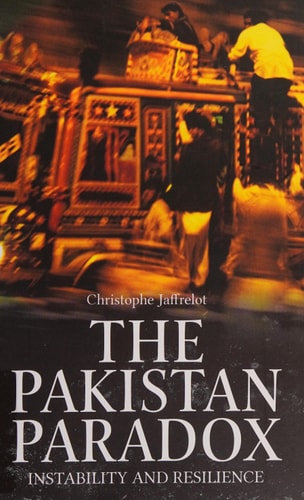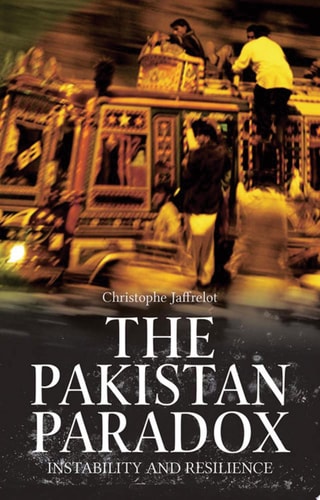
The Pakistan Paradox
0
0
As an Amazon Associate and affiliate partner, Menrva Books earns from qualifying purchases. Learn more
Author Description
Pakistan Was Born As The Creation Of Elite Urdu-speaking Muslims Who Sought To Govern A State That Would Maintain Their Dominance. After Rallying Non-urdu Speaking Leaders Around Him, Jinnah Imposed A Unitary Definition Of The New Nation State That Obliterated Linguistic Diversity. This Centralisation - 'justified' By The Indian Threat - Fostered Centrifugal Forces That Resulted In Bengali Secessionism In 1971 And Baloch, As Well As Mohajir, Separatisms Today. Concentration Of Power In The Hands Of The Establishment Remained The Norm, And While Authoritarianism Peaked Under Military Rule, Democracy Failed To Usher In Reform, And The Rule Of Law Remained Fragile At Best Under Zulfikar Bhutto And Later Nawaz Sharif. While Jinnah And Ayub Khan Regarded Religion As A Cultural Marker, Since Their Time Theislamists Have Gradually Prevailed. They Benefited From The Support Of General Zia, While Others, Including Sectarian Groups, Cashed In On Their Struggle Against The Establishment To Woo The Disenfranchised. Today, Pakistan Faces Existential Challenges Ranging From Ethnic Strife To Islamism, Two Sources Of Instability Which Hark Back To Elite Domination. But The Resilience Of The Country And Its People, The Resolve Of The Judiciary And Hints Of Reform In The Army May Open Up New Possibilities.
Menrva's Summary
THE THESIS
This book investigates the historical and structural origins of Pakistan's persistent instability, focusing on the tension between elite domination and the state's failure to accommodate ethnic and religious diversity. Christophe Jaffrelot, a prominent political scientist specializing in South Asian affairs, utilizes extensive historical analysis and political data to argue that the centralization of power by a narrow elite has consistently undermined democratic development and national cohesion. He examines how the initial imposition of a unitary state identity marginalized linguistic and regional groups, creating long-term centrifugal pressures that continue to challenge the nation's existence.
THE SCOPE MAP
What You Will Find
- Historical analysis of Pakistan's formation from the partition of India through the modern era.
- Examination of the role of the military and the 'establishment' in governance.
- Analysis of the shift from secular cultural markers to the rise of political Islam.
- Case studies on regional separatism, including the 1971 Bengali secession.
Scope Limits
- The text does not provide a comprehensive biography of individual political figures, focusing instead on systemic institutional trends.
- It does not offer a predictive model for future geopolitical outcomes, remaining grounded in historical and political assessment.
THE AUTHORITY PERSPECTIVE
Scholars and regional experts frequently cite this work as a definitive academic analysis of Pakistan's institutional failures and political trajectory. Readers often note the high density of the prose, which requires a foundational understanding of South Asian history to fully appreciate the author's arguments.
Page Count:
672
Publication Date:
2015-01-01
Publisher:
Oxford University Press
ISBN-10:
0190613025
ISBN-13:
9780190613020
History
Asian Studies
International relations
Sociology
Community Tags
Similar Books