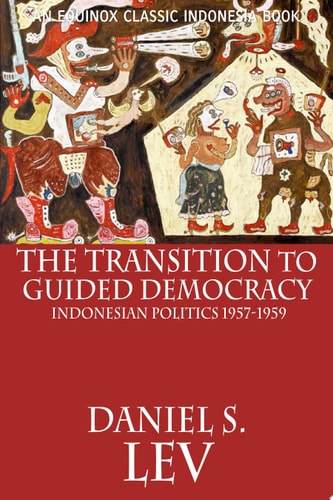
The Transition to Guided Democracy: Indonesian Politics, 1957-1959
0
0
As an Amazon Associate and affiliate partner, Menrva Books earns from qualifying purchases. Learn more
Author Description
Periods of major political transition are generally so complex as to present the political analyst with one of his most difficult challenges. Indonesia between 1957 and 1959 was no exception. During these years a previously wide diffusion of political power was superseded by its increasing concentration in three major bases: President Soekarno, the Army and the Communist Party. This was also a period of crisis in the relationships of Djakarta and Java with the other major islands of the archipelago; and it was marked by ideological ferment and change, largely dominated by the views of President Soekarno. It was during these years that Guided Democracy was given its initial shape, with the stage being set for a power struggle which was to become increasingly intense. So dramatic were the political experiences of this period and so deeply etched in the minds of many Indonesians that their effect is still strongly felt and can be expected to influence the character of Indonesia's political development for many years to come. Dr. Daniel S. Lev is particularly well qualified to examine the course of Indonesian political developments between 1957 and 1959. Arriving in Indonesia towards the end of this period, he remained there for three years engaged in an intensive study of its political life. His monograph constitutes by far the most searching analysis yet to appear of this critically important period. As well as providing a guide to these earlier formative years in the nation's political development, it will, I am sure, long remain relevant for all those seriously interested in understanding contemporary Indonesian political life. - George McT. Kahin, August 10, 1966
Menrva's Summary
THE THESIS
The Transition to Guided Democracy investigates the complex political landscape of Indonesia between 1957 and 1959, a period marked by the concentration of power and ideological shifts. This era saw the diffusion of political power superseded by its increasing concentration in three major bases: President Soekarno, the Army, and the Communist Party. The book also examines the crisis in the relationships between Djakarta and Java with the other major islands of the archipelago, alongside ideological ferment largely dominated by President Soekarno's views. It details the initial shaping of Guided Democracy and sets the stage for future power struggles, arguing that the political experiences of this period continue to influence Indonesia's development.
THE SCOPE MAP
- Analysis of the concentration of political power in President Soekarno, the Army, and the Communist Party.
- Examination of the crisis in relations between Java and the outer islands of the Indonesian archipelago.
- Exploration of the ideological ferment and changes, particularly influenced by President Soekarno.
- Detailed account of the initial formation and implementation of Guided Democracy.
- Assessment of the long-term impact of this period on Indonesia's political development.
THE AUTHORITY PERSPECTIVE
Daniel S. Lev is particularly well-qualified to examine the course of Indonesian political developments between 1957 and 1959, having arrived in Indonesia towards the end of this period and remaining there for three years engaged in an intensive study of its political life. His monograph constitutes by far the most searching analysis yet to appear of this critically important period. As well as providing a guide to these earlier formative years in the nation's political development, it will long remain relevant for all those seriously interested in understanding contemporary Indonesian political life. George McT. Kahin notes that the dramatic political experiences of this period are still strongly felt and can be expected to influence Indonesia's political development for many years to come.
Page Count:
320
Publication Date:
2009-01-01
Publisher:
Equinox Publishing
ISBN-10:
6028397407
ISBN-13:
9786028397407
History
Non-Fiction
Politics
Asian Studies
Community Tags
Similar Books