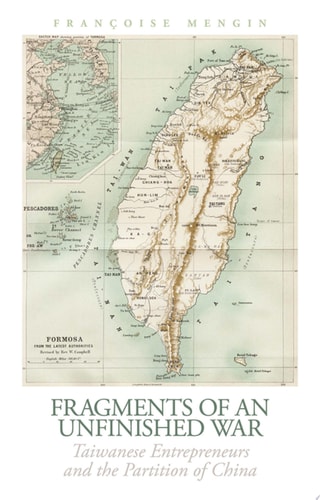
Fragments of an Unfinished War
0
0
As an Amazon Associate and affiliate partner, Menrva Books earns from qualifying purchases. Learn more
Author Description
The Republic Of China That Retreated To Taiwan In 1949 Maintains Its De Facto, If Not De Jure, In- Dependence Yet Beijing Has Consistently Refused Formally To Abandon The Idea Of Reunifying Taiwan With China. As Well As Growing Military Pressure, The Prc's Irredentist Policy Is Premised On Encouraging Cross-straits Economic Integration. Responding To Preferential Measures, Taiwanese Industrialists Have Invested Massively In The Prc, Often Relocating Their Businesses There. Fragments Of A Nation Torn Apart By Contradictory Claims, These Entrepreneurs Are Vectors Of A New Form Of Unification Imposed By The Main- Land, Promoted But Postponed On The Island By The Nationalist Party, And Rejected By Taiwanese Pro-independence Parties. Within What Can Be Described As An Unfinished Civil War, Socio-economic Dynamics Remain Embedded In Conflicts Over Sovereignty. Trans- National Actors Have Freed Themselves From Security Constraints, Thereby Benefiting Economically From A Reformist China, And Ultimately Restructuring Politics In Taiwan Itself, And, In So Doing, Relations Between Beijing And Taipei. A Fictitious Depoliticization Has Governed The Opening Of The Sino-taiwanese Border In Order To Postpone Any Resolution Of The Sovereignty Issue. Mengin's Startlingly Original Book Highlights The Competing, And Fragmented, Elements Within One Of The World's Most Intractable Territorial Disputes.
Menrva's Summary
THE THESIS
This book investigates how the ongoing, unresolved civil war between the People's Republic of China and the Republic of China on Taiwan is shaped by the intersection of economic integration and competing sovereignty claims. Françoise Mengin, a senior research fellow at CERI-Sciences Po, utilizes extensive political and economic analysis to argue that the cross-straits relationship is defined by a 'fictitious depoliticization.' She posits that Taiwanese entrepreneurs, by relocating businesses to the mainland, have become central actors in a process that simultaneously facilitates economic gain and complicates the political status of the island. The work examines how these transnational actors effectively restructure the political landscape of Taiwan while navigating the security constraints imposed by both Beijing and Taipei.
THE SCOPE MAP
What You Will Find
- Analysis of the post-1949 political status of Taiwan and its relationship with the PRC.
- Examination of the role of Taiwanese industrialists as transnational political actors.
- Discussion of the 'fictitious depoliticization' strategy used to manage sovereignty disputes.
- Evaluation of how economic integration impacts national identity and security policy.
Scope Limits
- The text does not provide a comprehensive military history of the conflict.
- It does not offer a predictive model for the final resolution of the sovereignty issue.
THE AUTHORITY PERSPECTIVE
Experts in Asian studies recognize this work as a rigorous examination of the complex interplay between economic globalization and territorial sovereignty. Readers frequently note the academic density of the prose, which provides a sophisticated framework for understanding the structural tensions governing the Taiwan Strait.
Page Count:
352
Publication Date:
2015-01-01
Publisher:
Oxford University Press
ISBN-10:
0190613033
ISBN-13:
9780190613037
History
International relations
China Studies
Taiwan Studies
Geopolitics
Community Tags
Other Editions(2)
Similar Books