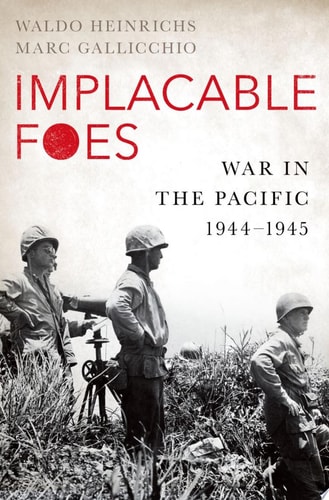
Implacable Foes
0
0
As an Amazon Associate and affiliate partner, Menrva Books earns from qualifying purchases. Learn more
Author Description
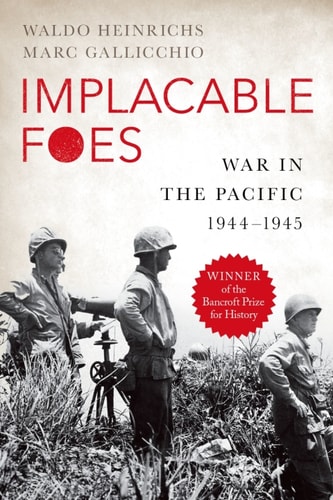
On May 8, 1945, Victory In Europe Day-shortened To V.e. Day-brought With It The Demise Of Nazi Germany. But For The Allies, The War Was Only Half-won. Exhausted But Exuberant American Soldiers, Ready To Return Home, Were Sent To Join The Fighting In The Pacific, Which By The Spring And Summer Of 1945 Had Turned Into A Gruelling Campaign Of Bloody Attrition Against An Enemy Determined To Fight To The Last Man. Germany Had Surrendered Unconditionally. The Japanese Would Clearly Make The Conditions Of Victory Extraordinarily High. In The United States, Americans Clamored For Their Troops To Come Home And For A Return To A Peacetime Economy. Politics Intruded Upon Military Policy While A New And Untested President Struggled To Strategize Among A Military Command That Was Often Mired In Rivalry. The Task Of Defeating The Japanese Seemed Nearly Unsurmountable, Even While Plans To Invade The Home Islands Were Being Drawn. Army Chief Of Staff General George C. Marshall Warned Of The Toll That The Agony Of Enduring Battle Would Likely Take. General Douglas Macarthur Clashed With Marshall And Admiral Nimitz Over The Most Effective Way To Defeat The Increasingly Resilient Japanese Combatants. In The Midst Of This Division, The Army Began A Program Of Partial Demobilization Of Troops In Europe, Which Depleted Units At A Time When They Most Needed Experienced Soldiers. In This Context Of Military Emergency, The Fearsome Projections Of The Human Cost Of Invading The Japanese Homeland, And Weakening Social And Political Will, Victory Was Salvaged By Means Of A Horrific New Weapon. As One Army Staff Officer Admitted, The Capitulation Of Hirohito Saved Our Necks. In Implacable Foes, Award-winning Historians Waldo Heinrichs (a Veteran Of Both Theatres Of War In World War Ii) And Marc Gallicchio Bring To Life The Final Year Of World War Two In The Pacific Right Up To The Dropping Of The Atomic Bombs Over Hiroshima And Nagasaki, Evoking Not Only Japanese Policies Of Desperate Defense,
Menrva's Summary
THE THESIS
This work investigates the complex intersection of military strategy, domestic political pressure, and command rivalries that defined the final, brutal year of the Pacific War. Historians Marc Gallicchio and Waldo H. Heinrichs Jr. utilize extensive archival research and military records to reconstruct the decision-making processes of the American high command. They argue that the path to victory was not a foregone conclusion, but rather a precarious navigation of dwindling public support, inter-service friction, and the staggering human cost of projected invasions.
THE SCOPE MAP
What You Will Find
- Analysis of the strategic disagreements between General Douglas MacArthur, General George C. Marshall, and Admiral Chester Nimitz.
- Examination of the logistical challenges posed by the partial demobilization of troops in Europe during the Pacific campaign.
- Documentation of the Japanese military's defensive strategies and the resulting attrition warfare.
Scope Limits
- The text focuses primarily on the American strategic perspective and high-level command decisions rather than individual infantry experiences.
- It does not provide a comprehensive history of the entire Pacific theater, concentrating specifically on the final year leading to the atomic bombings.
THE AUTHORITY PERSPECTIVE
Historians and reviewers frequently note the meticulous detail with which the authors navigate the bureaucratic and political tensions of the era. Experts highlight this as a significant contribution to understanding the difficult transition from the European theater to the final stages of the war against Japan.
Page Count:
640
Publication Date:
2017-01-01
Publisher:
Oxford University Press
ISBN-10:
0190616768
ISBN-13:
9780190616762
History
Political History
World War
Pacific War
Military History
Community Tags
Similar Books