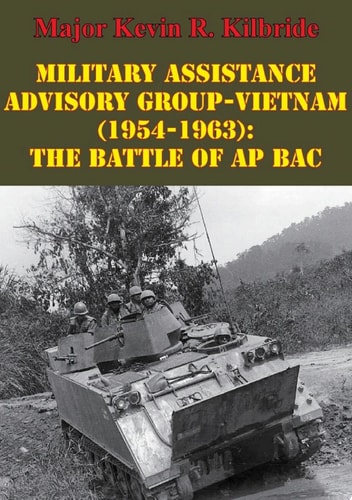
Military Assistance Advisory Group-Vietnam (1954-1963): The Battle Of Ap Bac
0
0
As an Amazon Associate and affiliate partner, Menrva Books earns from qualifying purchases. Learn more
Author Description
The performance of the Army of the Republic of Vietnam (ARVN) at the Battle of Ap Bac, January 2, 1963, established a narrative that the South Vietnamese were unwilling to fight or lacked aggressiveness. At the time of the Battle of Ap Bac, the South Vietnamese had been receiving direct military aid from the US and under the tutelage of American advisors for over eight years. Lieutenant Colonel John Paul Vann was the senior US Army advisor present and remarked after the battle, "It was a miserable damn performance, just like it always is. These people won't listen. They make the same mistake over and over again in the same way." In the context of those comments, ARVN did not show an appreciable increase in combat effectiveness with years of direct American support. The larger narrative surrounding the battle indicates that the performance of ARVN was a harbinger for future challenges and setbacks in South Vietnam. This battle and subsequent evaluation of the ARVN attribute the cause for combat ineffectiveness was the South Vietnamese lacking leadership and not possessing the necessary fighting spirit. Is the evaluation that the outcome of the Battle of Ap Bac hinged on the ARVN's lack of aggressiveness still valid when put in the broader cultural, social, and political context that existed at its birth?
Menrva's Summary
THE THESIS
This book investigates the validity of the prevailing narrative that the South Vietnamese Army's (ARVN) ineffectiveness at the Battle of Ap Bac stemmed solely from a lack of aggressiveness, particularly in light of over eight years of direct American military aid and advisory support. The author examines the performance of the ARVN at the Battle of Ap Bac on January 2, 1963, and contrasts it with the broader cultural, social, and political context of the time. The work questions whether the ARVN's leadership and fighting spirit were truly the sole determinants of combat ineffectiveness, or if other factors contributed to the outcome, which was seen as a harbinger of future challenges in South Vietnam.
THE SCOPE MAP
- Analysis of the ARVN's performance at the Battle of Ap Bac (January 2, 1963).
- Examination of the role and statements of senior US Army advisor Lieutenant Colonel John Paul Vann.
- Evaluation of the ARVN's combat effectiveness after eight years of direct American military aid and tutelage.
- Discussion of the larger narrative surrounding the battle as a predictor of future setbacks in South Vietnam.
- Exploration of the cultural, social, and political context surrounding the battle's outcome.
- Assessment of the validity of attributing ARVN ineffectiveness to a lack of leadership and fighting spirit.
THE AUTHORITY PERSPECTIVE
The book critically examines the historical assessment of the ARVN's performance at the Battle of Ap Bac, questioning the long-held conclusion that their ineffectiveness was primarily due to a lack of aggressiveness. By placing the battle within its broader socio-political context, the author challenges the simplistic attribution of combat failure to leadership and fighting spirit alone. The work aims to provide a more nuanced understanding of the factors influencing the ARVN's capabilities during the early stages of American involvement in Vietnam. This detailed analysis is likely to appeal to historians and students of military strategy seeking a deeper comprehension of the Vietnam War's origins.
Page Count:
106
Publication Date:
2014-08-15
Publisher:
Normanby Press
ISBN-10:
1782896902
ISBN-13:
9781782896906
Non-Fiction
History
Military History
Asian History
Vietnam War
Community Tags
Similar Books