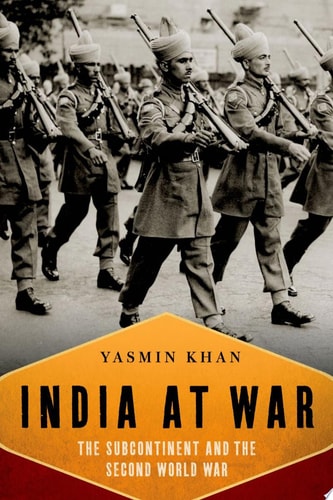
India at War: The Subcontinent and the Second World War
0
0
As an Amazon Associate and affiliate partner, Menrva Books earns from qualifying purchases. Learn more
Author Description
World War Ii Was A Global Catastrophe. Far Broader Than Just The Critical Struggle Between Allies And Axis, Its Ramifications Were Felt Throughout The World. It Was A Time Of Social Relocation, Reorienting Ideas Of Patriotism And Geographical Attachment, And Forcing The Movement Of People Across Oceans And Continents. In India At War, Yasmin Khan Offers An Account Of India's Role In The Conflict, One That Takes Into Consideration The Social, Economic, And Cultural Changes That Occurred In South Asia Between 1939 And 1945-and Reveals How Vital The Commonwealth's Contribution Was To The War Effort. Khan's Sweeping Work Centers On The Lives Of Ordinary Indian People, Exploring The Ways They Were Affected By A Cataclysmic War With Origins Far Beyond Indian Shores. In Manpower Alone, India's Contribution Was Staggering; It Produced The Largest Volunteer Army In World History, With 2.5 Million Men. Indians Were Engaged In Making The Raw Materials And Food Stuffs Needed By The Allies, And Became Involved In The Construction Of Airstrips, Barracks, Hospitals, Internee Camps, Roads And Railways. Their Lives Were Also Profoundly Affected By The Presence Of The Large Allied Army In The Region, Including Not Only British But American, African, And Chinese Troops. Madras Was Bombed By The Japanese And The Andaman And Nicobar Islands Were Occupied, While The Bengal Famine Of 1943-in Which Perhaps Three Million Bengalis Died-was A Man-made Disaster Precipitated By The Effects Of The War. This Authoritative Account Offers A Critically Important Look At The Contributions Of Colonial Manpower And Resources Essential To Sustaining The War, And Emphasizes The Significant Ways In Which The Conflict Shaped Modern India.
Menrva's Summary
THE THESIS
How did the Second World War fundamentally reshape the social, economic, and political landscape of India while simultaneously serving as a critical pillar for the Allied war effort? Yasmin Khan, a historian specializing in the history of South Asia, utilizes archival research and personal accounts to argue that India's involvement was not merely a peripheral colonial contribution but a central, transformative event that accelerated the end of British rule. The book examines the mobilization of the largest volunteer army in history alongside the devastating domestic consequences of the conflict, such as the Bengal Famine.
THE SCOPE MAP
What You Will Find
- Analysis of the mobilization of 2.5 million Indian volunteer soldiers.
- Examination of the economic impact of war-related production and infrastructure development.
- Documentation of the 1943 Bengal Famine as a consequence of wartime policy.
- Accounts of the social interactions between local populations and Allied troops stationed in India.
Scope Limits
- The text focuses primarily on the years 1939 to 1945.
- It does not provide a comprehensive military history of every specific battle fought by Indian troops abroad.
THE AUTHORITY PERSPECTIVE
Historians and scholars recognize this work as a definitive account of the Indian experience during the Second World War. Readers frequently note the balance between high-level political analysis and the inclusion of individual human experiences.
Page Count:
416
Publication Date:
2015-08-01
Publisher:
Oxford University Press, Incorporated
ISBN-10:
0190228911
ISBN-13:
9780190228910
History
Military History
India
Social change
World War
Colonial History
Asian History
Social History
Community Tags
Other Editions(2)
Similar Books