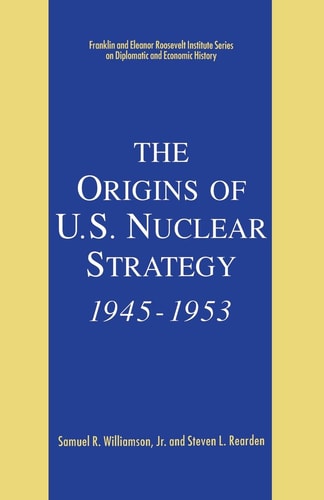
The Origins of U.S. Nuclear Strategy, 1945-1953
0
0
As an Amazon Associate and affiliate partner, Menrva Books earns from qualifying purchases. Learn more
Author Description
The United States took almost a decade after Hiroshima and Nagasaki to develop a coherent strategy of nuclear deterrence. This comprehensive study by two careful and well-informed historians provides the best explanation we have of why this process took so long; it also suggests the inherent difficulties of relying on nuclear weapons to provide security in the first place. Required reading for anyone interested in the early history of the nuclear era.
Menrva's Summary
THE THESIS
The United States struggled for nearly a decade to forge a coherent nuclear deterrence strategy in the aftermath of World War II. This study meticulously details the complex reasons behind this prolonged development, drawing on the expertise of two knowledgeable historians. It examines the inherent challenges and difficulties associated with relying on nuclear weapons for national security, offering crucial insights into the early nuclear era.
THE SCOPE MAP
- The evolution of U.S. nuclear strategy from 1945 to 1953.
- Analysis of the political and military factors influencing strategic development.
- Examination of the difficulties in establishing nuclear deterrence.
- Insights into the early history of the nuclear age.
THE AUTHORITY PERSPECTIVE
This book is regarded as essential reading for understanding the formative years of U.S. nuclear policy. The authors, described as careful and well-informed historians, provide a comprehensive explanation for the slow development of a coherent nuclear deterrence strategy. The work is noted for its thoroughness and its critical examination of the inherent challenges in relying on nuclear weapons for security.
Page Count:
224
Publication Date:
1993-06-15
Publisher:
Palgrave Macmillan US
ISBN-10:
1349606766
ISBN-13:
9781349606764
History
Non-Fiction
Politics
Military History
Community Tags
Similar Books