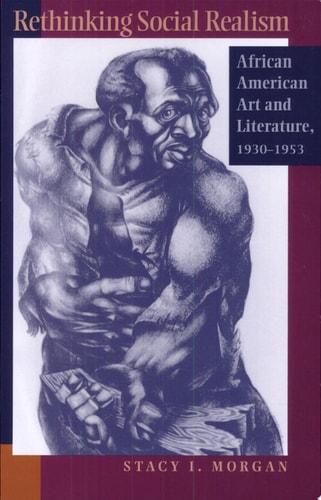
Rethinking Social Realism: African American Art and Literature, 1930-1953
0
0
As an Amazon Associate and affiliate partner, Menrva Books earns from qualifying purchases. Learn more
Author Description
The social realist movement, with its focus on proletarian themes and its strong ties to New Deal programs and leftist politics, has long been considered a depression-era phenomenon that ended with the start of World War II. This study explores how and why African American writers and visual artists sustained an engagement with the themes and aesthetics of social realism into the early cold war-era--far longer than a majority of their white counterparts. Stacy I. Morgan recalls the social realist atmosphere in which certain African American artists and writers were immersed and shows how black social realism served alternately to question the existing order, instill race pride, and build interracial, working-class coalitions. Morgan discusses, among others, such figures as Charles White, John Wilson, Frank Marshall Davis, Willard Motley, Langston Hughes, Sterling Brown, Elizabeth Catlett, and Hale Woodruff.
Menrva's Summary
THE THESIS
This study investigates the enduring presence and adaptation of social realism within African American art and literature from 1930 to 1953. Stacy I. Morgan examines how Black writers and visual artists continued to engage with the themes and aesthetics of social realism long after its perceived decline among their white counterparts, extending its influence well into the early Cold War era. The book explores how this sustained engagement served multiple purposes, including challenging the status quo, fostering racial pride, and forging alliances across racial and class lines. Morgan analyzes the works and contributions of prominent figures such as Charles White, Langston Hughes, Elizabeth Catlett, and Hale Woodruff, among others, within the context of the social realist atmosphere they inhabited.
THE SCOPE MAP
- Analysis of the sustained engagement with social realism by African American artists and writers beyond the 1930s.
- Exploration of the specific themes and aesthetics of social realism as adopted and adapted by Black creators.
- Discussion of the socio-political context, including New Deal programs and leftist politics, influencing this artistic movement.
- Examination of how Black social realism functioned to question existing power structures.
- Analysis of the role of Black social realism in instilling race pride and promoting solidarity.
- Focus on the development of interracial, working-class coalitions through art and literature.
- In-depth discussion of key figures including Charles White, John Wilson, Frank Marshall Davis, Willard Motley, Langston Hughes, Sterling Brown, Elizabeth Catlett, and Hale Woodruff.
THE AUTHORITY PERSPECTIVE
The book is recognized for its detailed examination of how African American artists and writers maintained and evolved the principles of social realism into the post-World War II era. It highlights the unique ways in which Black creators utilized these aesthetics to articulate their experiences, foster community, and engage with political discourse. The study is noted for its in-depth analysis of specific artists and writers, providing a nuanced understanding of their contributions to both American art and literature and the broader social realist movement. This work offers a critical perspective on the longevity and adaptability of social realism within a specific cultural context.
Page Count:
356
Publication Date:
2004-01-01
Publisher:
University of Georgia Press
ISBN-10:
0820325791
ISBN-13:
9780820325798
Non-Fiction
History
Cultural History
Literary Criticism
Art History
Social History
Community Tags
Similar Books














