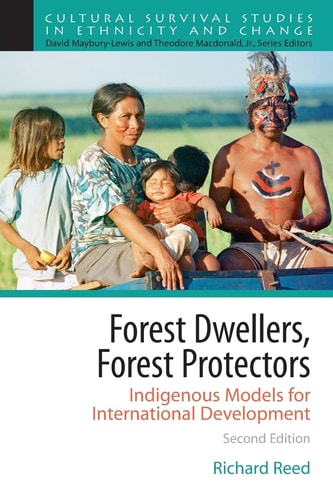
Forest Dwellers, Forest Protectors: Indigenous Models for International Development
0
0
As an Amazon Associate and affiliate partner, Menrva Books earns from qualifying purchases. Learn more
Author Description
The Guarani of Paraguay have survived over four centuries of contact with the commercial system, while keeping in tact their traditions of leadership, religion and kinship. This concise ethnography examines how the Guarani have adapted over time, in concert with Paraguay’s subtropical forest system.New To This Edition: Expanded historical background and updated demographic information on the Guarani brings the research to the present day (Chapter 1). Expands and strengthens the discussion of “sustainability” to include more recent advances in the concept (Chapter 1), and introduces the idea of “subsidy from nature” into the discussion of conventional tropical development (Chapter 3). Develops the discussion of women’s labor in horticulture (Chapter 3). Analyzes the effects of indigenous mixed agro-forestry in stemming the high rates of Paraguayan deforestation of the 1990s (Chapter 4). Discusses the recent globalization of the yerba mate market, and the economy's effecton Paraguay’s protected areas (Chapter 4). Describes Guarani ethnic federations as a means to engage the national and international political institutions (Chapter 4). Explores the rapid growth in Guarani population in native communities, which results from lower infant mortality, more land pressure and more reliable census data (Chapter 4).This brief introductory text makes the ideal supplementary text for students of anthropology.
Menrva's Summary
THE THESIS
This text investigates how the Guarani people of Paraguay have successfully maintained their cultural traditions and social structures while navigating centuries of integration into global commercial systems. Richard Reed, an anthropologist specializing in indigenous adaptation, utilizes longitudinal ethnographic research to analyze the intersection of Guarani kinship, leadership, and religious practices with the ecological constraints of the subtropical forest. The work argues that indigenous models of agro-forestry and social organization offer viable, sustainable alternatives to conventional development paradigms that often lead to environmental degradation.
THE SCOPE MAP
What You Will Find
- Historical analysis of Guarani survival strategies across four centuries of contact.
- Examination of the concept of "subsidy from nature" in tropical development.
- Case studies on the impact of indigenous mixed agro-forestry on regional deforestation rates.
- Analysis of the globalization of the yerba mate market and its influence on protected areas.
- Discussion of indigenous political engagement through ethnic federations.
THE AUTHORITY PERSPECTIVE
This work is regarded as a focused, accessible ethnographic study suitable for undergraduate students of anthropology and development. The text provides a clear, evidence-based framework for understanding how indigenous communities balance traditional practices with modern economic pressures.
Page Count:
112
Publication Date:
2008-08-07
Publisher:
Routledge
ISBN-10:
0205628117
ISBN-13:
9780205628117
Anthropology
Ethnography
South America
Community Tags
Other Editions(3)

Similar Books