The World of Ham Radio, 1901-1950
0
0
As an Amazon Associate and affiliate partner, Menrva Books earns from qualifying purchases. Learn more
Author Description
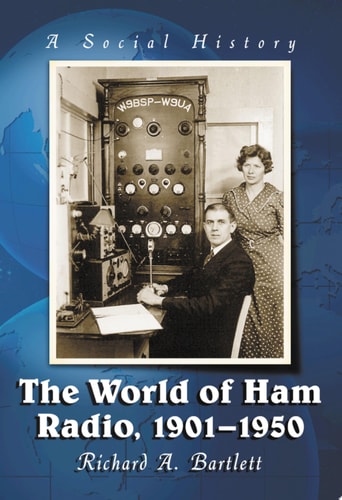
During the first fifty years of the twentieth century, ham radio went from being an experiment to virtually an art form. Because of the few government restrictions and the low monetary investment required, the concept of ham radio appealed to various people. More than just a simple hobby, however, ham radio required its operators to understand radio theory, be able to trace a schematic and know how to build a transmitter and receiver with whatever material they might have available. With the advent of World War II and the increased need for cutting-edge communications, the United States government drew upon the knowledge and skill of these amateur ham radio operators. This book explores the history of ham radio operators, emphasizing their social history and their many contributions to the technological development of worldwide communications. It traces the concept of relays, including the American Radio Relay League, from contacts as close as 25 miles apart to operators anywhere in the world. The book highlights the part played by ham radio in many of the headline events of the half century, especially exploration and aviation "firsts". The ways in which these primarily amateur operators assisted in times of disaster including such events as the sinking of the Titanic and the 1937 Ohio River flood, are also examined.
Menrva's Summary
THE THESIS
This book chronicles the evolution of amateur radio from its experimental beginnings to its status as a sophisticated art form during the first half of the twentieth century. The narrative explores how limited government regulation and low financial barriers allowed a diverse group of individuals to engage with ham radio, requiring not only theoretical knowledge but also practical skills in building transmitters and receivers. The book details the crucial role amateur operators played during World War II, leveraging their expertise for critical communications, and traces the development of relay networks like the American Radio Relay League, connecting operators across vast distances.
THE SCOPE MAP
- The social history of amateur radio operators from 1901 to 1950.
- Contributions of ham radio operators to the technological development of global communications.
- The evolution of relay concepts, including the American Radio Relay League.
- The role of ham radio in significant historical events such as exploration and aviation 'firsts'.
- Assistance provided by amateur operators during disasters like the sinking of the Titanic and the 1937 Ohio River flood.
THE AUTHORITY PERSPECTIVE
The book is presented as a comprehensive exploration of amateur radio's formative years, highlighting its technical and social dimensions. The author emphasizes the practical skills and theoretical knowledge required of operators, as well as their significant contributions to communication technology and historical events. The scope includes the development of relay networks and the operators' vital role in times of disaster and wartime. The material suggests a detailed account for those interested in the history of technology and communication.
Page Count:
292
Publication Date:
2015-01-28
Publisher:
McFarland & Company, Inc., Publishers
ISBN-10:
1476612609
ISBN-13:
9781476612607
Science & Technology
History
Non-Fiction
Social History
Community Tags
Similar Books