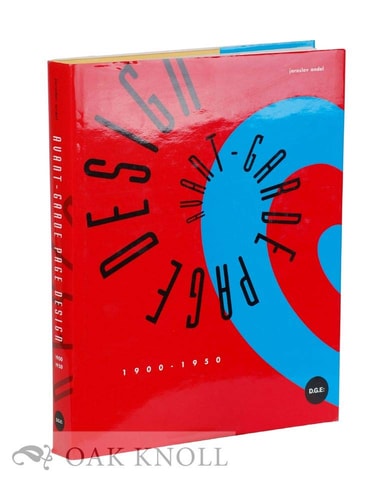
Avant-garde Page Design, 1900-1950
0
0
As an Amazon Associate and affiliate partner, Menrva Books earns from qualifying purchases. Learn more
Author Description
The primary goal of the artist-designers who were supporters of New Typography was to create an international optical language based on clarity and functionality. Using sans serif typefaces, asymmetrical compositions, photography, and photomontage, they designed type based on the simplest geometrical forms and eliminated the use of upper-case letters. Similar to the basis of the International Style in architecture, these innovations were considered to be the foundations of a new society in which the idea that form follows function and the rational, economical use of material and technique would be important elements in the creation of an egalitarian social order. However, the New Typography and International Style were utopian movements whose works and ideas did not always survive intact in a real and imperfect world. Indeed both became corrupted by political ideology and/or the corporate system. During the 1930s the corruption of avant-garde ideas and techniques were most visible in the fusion of advertising and political propaganda: the Nazis and the Soviets co-opted the powerful images and techniques of the avant-garde. The Nazi propagandists borrowed ideas from the Communists, and the Soviet Realists and Nazi artists shared a similar approach to imagery. It was this contamination of art and ideology, as well as the atmosphere of brutal political repression, that led Tschichold and others to modify or abandon their ideas and return to classical design principles.
Menrva's Summary
THE THESIS
This book examines the evolution of avant-garde page design and typography from 1900 to 1950, focusing on the principles of New Typography. The author explores how artists and designers sought to create an international visual language characterized by clarity and functionality, employing sans-serif typefaces, asymmetrical layouts, photography, and photomontage. It details how these innovations, akin to the International Style in architecture, were rooted in a utopian vision of an egalitarian society where form followed function and resources were used rationally. The text also addresses the eventual corruption of these avant-garde ideals by political ideologies and corporate systems, particularly through advertising and propaganda in the 1930s, which led some designers to reconsider their approaches.
THE SCOPE MAP
- Analysis of the New Typography movement and its core tenets.
- Exploration of key design elements: sans-serif typefaces, asymmetrical composition, photography, and photomontage.
- Discussion of the utopian ideals behind the movement and their connection to social order.
- Examination of the influence of the International Style in architecture.
- Case studies of how avant-garde ideas were co-opted by political propaganda (Nazis and Soviets).
- The impact of political repression and ideological corruption on designers like Tschichold.
- The shift back towards classical design principles by some avant-garde figures.
THE AUTHORITY PERSPECTIVE
The book delves into the historical context and artistic principles of avant-garde page design and New Typography, offering a detailed account of its rise and challenges. It highlights the movement's initial utopian aspirations for a functional and egalitarian visual language, contrasting them with the later co-option of these techniques for political and commercial purposes. The text provides insight into the complex relationship between art, ideology, and societal change during the first half of the 20th century. It is presented as a scholarly examination of a pivotal period in graphic design history.
Page Count:
388
Publication Date:
2002-01-01
Publisher:
Delano Greenidge Editions
ISBN-10:
0929445090
ISBN-13:
9780929445090
Art
History
Non-Fiction
Art History
Avant-garde
Graphic Design
Typography
Community Tags
Similar Books














