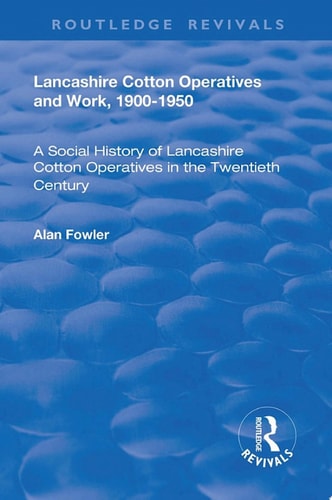
Lancashire Cotton Operatives and Work, 1900-1950
0
0
As an Amazon Associate and affiliate partner, Menrva Books earns from qualifying purchases. Learn more
Author Description
This title was first published in 2003. The cotton industry was one of the major motors that powered Britain's industrial development from the mid-eighteenth century, contributing in no small way to the revolution that was to transform Europe over the next hundred years. The combination of technological developments, colonial exploits and social transformation that all came together in the Lancashire cotton industry provided a perfect example of how the new world would function, its priorities and its ambitions. Into this fast moving and fluid situation, were thrust the men, women and children who formed the vast pool of labour necessary to keep the spindles and looms running. It is their experiences above all, that illuminates the history of the cotton industry, and how it came to change the face of Britain through the nineteenth and early twentieth centuries. In this study, Alan Fowler takes an in-depth look at the Lancashire cotton industry through the prism of its workers, their families and organisations. He argues that by 1850 the triumph of the factory system was complete, and the factory operative a mainstay of a transformed society based on a new economic order. With this increasingly important role in the new economy came opportunities, which cotton workers were not slow to grasp. Crucial to the history of the Lancashire cotton operatives were the collective organisations they established which forced employers and government to treat with them. By the beginning of the twentieth century these organisations had managed to raise wages, improve working conditions, reduce working hours, establish the right to holidays, and force the introduction of factory legislation. This book explores how these victories were won and the impact they had on the industry and wider society.
Menrva's Summary
THE THESIS
The book investigates the pivotal role of Lancashire cotton operatives in shaping Britain's industrial and social landscape during a transformative period. Alan Fowler examines the experiences of the men, women, and children who powered the cotton industry, arguing that by 1850, the factory system's triumph had solidified the operative's position in a new economic order. The study highlights how these workers, through their collective organizations, successfully negotiated for improved wages, working conditions, reduced hours, and factory legislation. It explores the strategies employed to achieve these victories and their broader societal impact.
THE SCOPE MAP
- The evolution of the Lancashire cotton industry from the mid-eighteenth century.
- The experiences of cotton mill workers, their families, and their organizations.
- Analysis of the triumph of the factory system by 1850 and the operative's societal role.
- The establishment and impact of collective organizations among cotton workers.
- The negotiation and achievement of improved wages, working conditions, and reduced hours.
- The role of factory legislation and its enforcement.
THE AUTHORITY PERSPECTIVE
This book offers a detailed examination of the Lancashire cotton industry through the lens of its workforce, focusing on their struggles and achievements. The author posits that the operatives' collective organizations were instrumental in securing significant improvements in their working lives and societal standing. The study underscores the profound impact these workers and their unions had on the industry and the broader transformation of British society.
Page Count:
256
Publication Date:
2018-10-24
Publisher:
Taylor & Francis
ISBN-10:
1351753207
ISBN-13:
9781351753203
History
Non-Fiction
Labor history
Social History
Industrial history
Community Tags
Similar Books