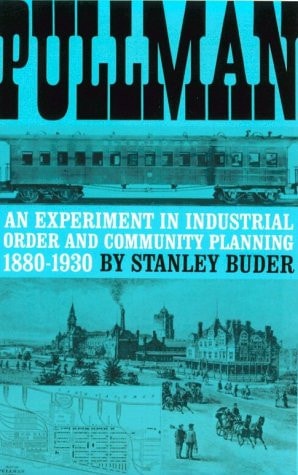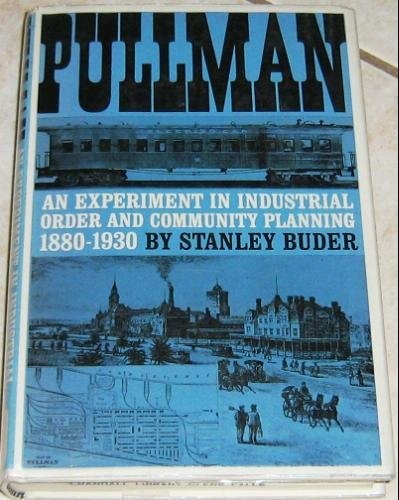
Pullman: An Experiment in Industrial Order and Community Planning, 1880-1930
0
0
As an Amazon Associate and affiliate partner, Menrva Books earns from qualifying purchases. Learn more
Author Description
In 1880 George M. Pullman of sleeping-car fame commissioned a planned, model town to be constructed eight miles south of Chicago in conjunction with his new factory. A forerunner of later "garden cities," Pullman was built with the aid of architects and landscape designers. It would ba a showplace for Pullman's Palace Car Company.
Menrva's Summary
THE THESIS
This work investigates the viability and eventual decline of the model industrial town of Pullman as a social and economic experiment in corporate paternalism. Stanley Buder, a historian specializing in urban development, utilizes primary archival records from the Pullman Palace Car Company and contemporary municipal documents to analyze the intersection of industrial efficiency and community design. The book argues that while the town represented a significant advancement in urban planning, the inherent contradictions of corporate control over private life ultimately undermined the project's long-term stability.
THE SCOPE MAP
What You Will Find
- Detailed analysis of the 1880-1930 historical period regarding industrial town development.
- Examination of the architectural and landscape design principles applied to the Pullman site.
- Case studies on the social dynamics between the Pullman Palace Car Company and its workforce.
- Evaluation of the transition from a private company town to a municipal entity.
THE AUTHORITY PERSPECTIVE
Historians and urban planners frequently cite this text as a foundational study on the limitations of the company town model in American history. Readers often note the academic rigor and the detailed documentation of the socio-economic tensions that defined the Pullman experiment.
Page Count:
263
Publication Date:
1967-01-01
Publisher:
Oxford University Press
ISBN-10:
0196316642
ISBN-13:
9780196316642
History
Architecture
Economic History
Labor history
urban planning
Social History
Industrial history