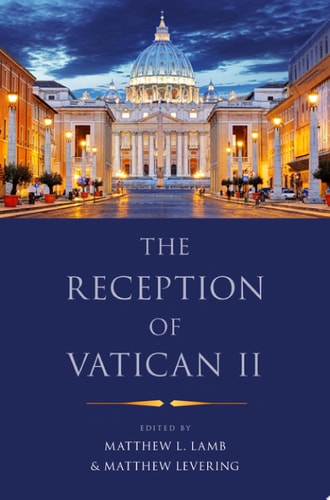
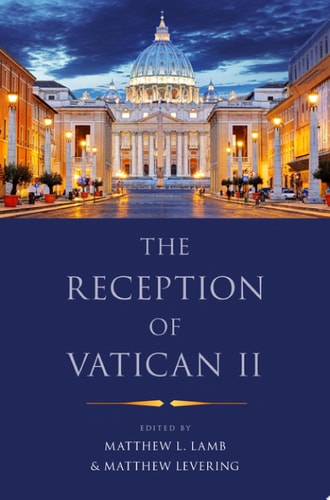
The Reception of Vatican II
0
0
As an Amazon Associate and affiliate partner, Menrva Books earns from qualifying purchases. Learn more
Author Description
From 1962 to 1965, in perhaps the most important religious event of the twentieth century, the Second Vatican Council met to plot a course for the future of the Roman Catholic Church. After thousands of speeches, resolutions, and votes, the Council issued sixteen official documents on topics ranging from divine revelation to relations with non-Christians. But the meaning of the Second Vatican Council has been fiercely contested since before it was even over, and the years since its completion have seen a battle for the soul of the Church waged through the interpretation of Council documents. The Reception of Vatican II looks at the sixteen conciliar documents through the lens of those battles. Paying close attention to reforms and new developments, the essays in this volume show how the Council has been received and interpreted over the course of the more than fifty years since it concluded.The contributors to this volume represent various schools of thought but are united by a commitment to restoring the view that Vatican II should be interpreted and implemented in line with Church Tradition. The central problem facing Catholic theology today, these essays argue, is a misreading of the Council that posits a sharp break with previous Church teaching. In order to combat this reductive way of interpreting the Council, these essays provide a thorough, instructive overview of the debates it inspired.
Menrva's Summary
THE THESIS
How should the documents of the Second Vatican Council be interpreted in relation to the broader history of Catholic tradition? Matthew Levering and Matthew L. Lamb curate a collection of essays from diverse theological perspectives to address the ongoing debate regarding the implementation of Vatican II. The authors argue against the interpretation that the Council represents a rupture with previous Church teaching, instead proposing a framework that views the Council as a continuation of established tradition.
THE SCOPE MAP
What You Will Find
- Analysis of the sixteen official documents issued by the Second Vatican Council.
- Examination of the historical reception and theological interpretation of conciliar texts over the past fifty years.
- Scholarly essays representing various schools of thought within Catholic theology.
Scope Limits
- The text does not provide a general history of the Council proceedings themselves.
- It does not address secular or non-Catholic critiques of the Council's impact.
THE AUTHORITY PERSPECTIVE
Experts and theologians recognize this volume as a significant contribution to the hermeneutical debate surrounding the Council's legacy. Readers frequently note the academic density of the prose, which is intended for those already familiar with Catholic theological discourse and ecclesiastical history.
Page Count:
486
Publication Date:
2017-03-09
Publisher:
Oxford University Press
ISBN-10:
0190625805
ISBN-13:
9780190625801
Religion
Catholicism
Vatican II
Church History
Theology
Catholic Church
Community Tags
Other Editions(3)
Similar Books