Chicago's South Side, 1946-1948
0
0
As an Amazon Associate and affiliate partner, Menrva Books earns from qualifying purchases. Learn more
Author Description
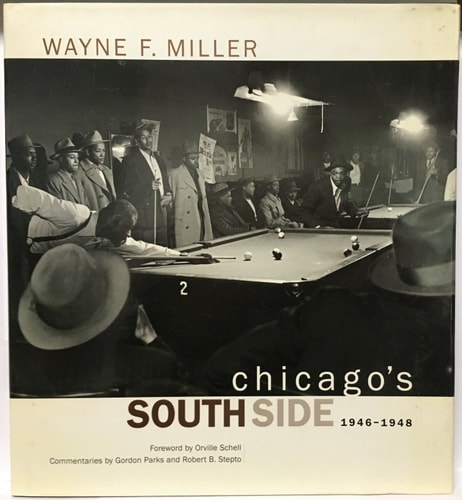
Wayne Miller's photographs chronicle a black Chicago of fifty years ago: the South Side community that burgeoned as thousands of African Americans, almost exclusively from the South, settled in the city during the Great Migration of the World War II years. The black-and-white images provide a visual history of Chicago at the height of its industrial order--when the stockyards, steel mills, and factories were booming--but, more important, they capture the intimate moments in the daily lives of ordinary people. Miller was adept at becoming invisible, and his photographs are full of naked, disarming emotion. One of the first Western photographers to document the destruction of Hiroshima and the survivors of the bombing, Wayne Miller had just returned from his stint as a World War II Navy combat photographer under the direction of Edward Steichen when he received two concurrent Guggenheim fellowships to fund his Chicago project. Taken over a course of three years beginning in 1946, his photographs span city scenes from storefront church services to slaughterhouse workers in the taverns at night to a couple making love. In addition to affording a glimpse into the hopes and hardships shared by a community of migrants who had just made the long journey from the rural South to the urban North, the images collected in Chicago's South Side reflect the enormous variety of human experiences and emotions that occurred at a unique time and place in the American landscape. A few celebrities appear in these images--Paul Robeson, Ella Fitzgerald, Lena Horne, Duke Ellington. But mostly we see ordinary people--in clubs and at church, sporting events, parades. Much is on view that is of interest to the student of mid-twentieth-century black Chicago: the neighborhoods Richard Wright's Bigger Thomas traversed in Native Son, the Bronzeville limned in Gwendolyn Brooks's earliest poems, and the street life that inspired the urbanscapes of painter Archibald Motley.
Menrva's Summary
THE THESIS
This book presents a photographic exploration of Chicago's South Side between 1946 and 1948. The collection captures the community that grew as African Americans migrated from the South during the Great Migration, documenting the city during a period of industrial boom. The photographs, taken by Wayne Miller, focus on the intimate daily lives of ordinary people, offering a visual history of their hopes, hardships, and the diverse human experiences within this unique time and place.
THE SCOPE MAP
- Black-and-white photographic documentation of Chicago's South Side from 1946-1948.
- Images capturing the daily lives of African American migrants from the rural South.
- Scenes of urban industrial life, including stockyards, steel mills, and factory workers.
- Intimate moments of ordinary people, from storefront church services to nightlife.
- Portraits of community life, including clubs, church events, and parades.
- Appearances by notable figures such as Paul Robeson, Ella Fitzgerald, Lena Horne, and Duke Ellington.
- Visual representation of neighborhoods referenced in Richard Wright's 'Native Son' and Gwendolyn Brooks's early poetry.
THE AUTHORITY PERSPECTIVE
The collection is recognized for its intimate and disarming portrayal of a significant period in African American history. Wayne Miller's skill in capturing candid emotion is highlighted, offering a valuable visual record of the Great Migration's impact on Chicago. The photographs provide insight into both the broader community experiences and the specific challenges faced by migrants. This work serves as a crucial document for understanding mid-20th century Black Chicago.
Page Count:
112
Publication Date:
2000-01-01
Publisher:
University of California Press, published
ISBN-10:
0520223160
ISBN-13:
9780520223165
History
Photography
Non-Fiction
Social History
Urban Studies
Community Tags
Similar Books