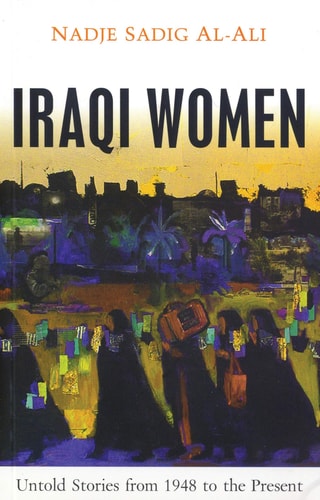
Iraqi Women: Untold Stories from 1948 to the Present
0
0
As an Amazon Associate and affiliate partner, Menrva Books earns from qualifying purchases. Learn more
Author Description
The war in Iraq has put the condition of Iraqi women firmly on the global agenda. For years, their lives have been framed by state oppression, economic sanctions and three wars. Now they must play a seminal role in reshaping their country's future for the twenty-first century. Nadje Al-Ali challenges the myths and misconceptions which have dominated debates about Iraqi women, bringing a much needed gender perspective to bear on the central political issue of our time. Based on life stories and oral histories of Iraqi women, she traces the history of Iraq from post-colonial independence, to the emergence of a women's movement in the 1950s, Saddam Hussein's early policy of state feminism to the turn towards greater social conservatism triggered by war and sanctions. Yet, the book also shows that, far from being passive victims, Iraqi women have been, and continue to be, key social and political actors. Following the invasion, Al-Ali analyses the impact of occupation and Islamist movements on women's lives and argues that US-led calls for liberation has led to a greater backlash against Iraqi women.
Menrva's Summary
THE THESIS
This book challenges prevailing narratives about Iraqi women by presenting their lived experiences and agency from 1948 to the present. Nadje Sadig Al-Ali, drawing on life stories and oral histories, reconstructs the history of Iraqi women through periods of post-colonial independence, the rise of a women's movement in the 1950s, Saddam Hussein's state feminism, and the increasing social conservatism brought on by war and sanctions. The work argues that Iraqi women have consistently been active social and political agents, not merely passive victims, and critically examines the impact of occupation and Islamist movements on their lives, suggesting that liberation rhetoric has paradoxically led to a backlash.
THE SCOPE MAP
- A historical overview of Iraqi women's lives from 1948 to the present.
- Analysis of the impact of state oppression, economic sanctions, and wars on women.
- Exploration of the Iraqi women's movement and its evolution.
- Examination of Saddam Hussein's policies related to women.
- Discussion of the shift towards social conservatism due to conflict and sanctions.
- Case studies and oral histories of Iraqi women.
- An analysis of the effects of the US-led invasion and occupation on women's rights and lives.
THE AUTHORITY PERSPECTIVE
This book is regarded as a crucial intervention that reframes the discourse on Iraqi women, moving beyond victimhood to highlight their active roles in shaping their society. By grounding its analysis in personal testimonies, it offers a nuanced historical perspective that counters simplistic or externally imposed narratives. The work is particularly noted for its gendered lens on political events, providing essential context for understanding contemporary Iraq. It is likely to be of interest to scholars of Middle Eastern studies, gender studies, and modern history.
Page Count:
304
Publication Date:
2007-02-12
Publisher:
Zed Books
ISBN-10:
1842777440
ISBN-13:
9781842777442
History
Non-Fiction
Social History
Community Tags
Similar Books