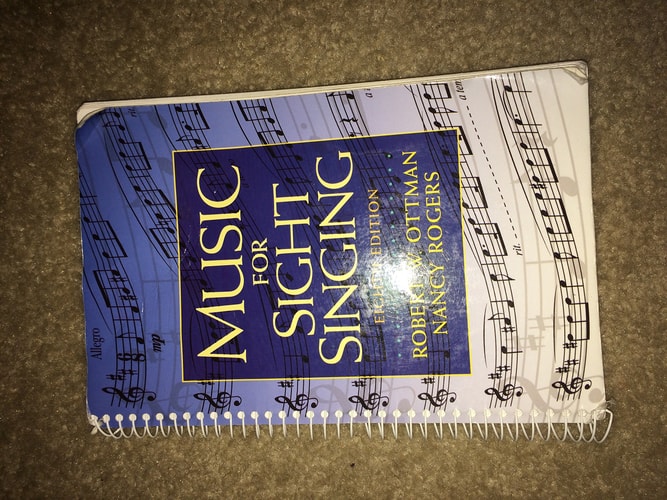
Music for Sight Singing
0
0
As an Amazon Associate and affiliate partner, Menrva Books earns from qualifying purchases. Learn more
Author Description
For courses in Music Theory (a two-year sequence including sight singing and ear training) as well as separate Sight Singing courses.Using an abundance of meticulously organized melodies drawn from the literature of composed music and a wide range of the world’s folk music, Ottman provides the most engaging and comprehensive Sight Singing text on the market.Over fifty years ago, Robert W. Ottman set out to write a book that draws examples from the literature as opposed to being composed by the author. He proposed that students should work with "real" music as they study musical forms. The result was Music for Sight Singing. Not only is real music more enjoyable and interesting to sing than dry examples, but genuine repertoire naturally introduces a host of important musical considerations beyond pitch and rhythm (including dynamics, accents, articulations, slurs, repeat signs, and tempo markings). Several generations of teachers have also agreed that Ottman's ability to order his examples from the simple to the complex is another key to the book's long term success. Nancy Rogers, the book's new author, has added new vitality to the book, introducing exercises to develop creativity as well as to build basic skills.
Menrva's Summary
THE THESIS
This text investigates the most effective pedagogical methods for developing sight singing and ear training proficiency through the use of authentic musical literature rather than artificial exercises. Authors Robert W. Ottman and Nancy Rogers argue that students achieve greater musical fluency by engaging directly with established repertoire, which introduces complex dynamics, articulations, and stylistic nuances alongside fundamental pitch and rhythm training. The book utilizes a structured, progressive framework that transitions learners from basic melodic structures to advanced musical forms.
THE SCOPE MAP
What You Will Find
- A vast collection of melodies sourced from classical literature and global folk traditions.
- A systematic, progressive curriculum that orders exercises from simple to complex.
- Integration of performance markings such as dynamics, accents, and tempo indications.
- Pedagogical exercises designed to foster both technical accuracy and creative musical expression.
THE AUTHORITY PERSPECTIVE
This text is widely regarded as a standard reference in collegiate music theory curricula due to its long-standing reliance on genuine musical repertoire. The systematic organization and the inclusion of diverse folk and classical examples provide a robust framework for both instructors and students in ear training sequences.
Page Count:
448
Publication Date:
2010-01-13
Publisher:
Pearson
ISBN-10:
0205760082
ISBN-13:
9780205760084
Music
Reference
textbook
Music theory
Sight Singing
Education
Community Tags
Similar Books