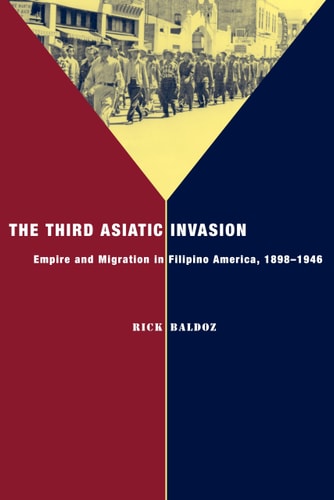
The Third Asiatic Invasion: Empire and Migration in Filipino America, 1898-1946
0
0
As an Amazon Associate and affiliate partner, Menrva Books earns from qualifying purchases. Learn more
Author Description
The first half of the twentieth century witnessed a wave of Filipino immigration to the United States, following in the footsteps of earlier Chinese and Japanese immigrants, the first and second “Asiatic invasions.” Perceived as alien because of their Asian ethnicity yet legally defined as American nationals granted more rights than other immigrants, Filipino American national identity was built upon the shifting sands of contradiction, ambiguity, and hostility. Rick Baldoz explores the complex relationship between Filipinos and the U.S. by looking at the politics of immigration, race, and citizenship on both sides of the Philippine-American divide: internationally through an examination of American imperial ascendancy and domestically through an exploration of the social formation of Filipino communities in the United States. He reveals how American practices of racial exclusion repeatedly collided with the imperatives of U.S. overseas expansion. A unique portrait of the Filipino American experience, The Third Asiatic Invasion links the Filipino experience to that of Puerto Ricans, Mexicans, Chinese and Native Americans, among others, revealing how the politics of exclusion played out over time against different population groups. Weaving together an impressive range of materials—including newspapers, government reports, legal documents and archival sources—into a seamless narrative, Baldoz illustrates how the quixotic status of Filipinos played a significant role in transforming the politics of race, immigration and nationality in the United States.
Menrva's Summary
THE THESIS
This book investigates the complex interplay of empire, migration, and national identity in the Filipino American experience from 1898 to 1946. Rick Baldoz examines the paradoxical position of Filipinos as perceived aliens yet legally defined American nationals, exploring how this contradiction shaped their identity amidst hostility and shifting legal frameworks. The study analyzes the politics of immigration, race, and citizenship by considering both American imperial ascendancy internationally and the formation of Filipino communities domestically. Baldoz reveals how American racial exclusion policies consistently clashed with the demands of U.S. overseas expansion, significantly altering the landscape of race, immigration, and nationality in the United States.
THE SCOPE MAP
- An examination of Filipino immigration to the United States as the "Third Asiatic invasion."
- Analysis of the legal and social status of Filipinos as American nationals, distinct from other Asian immigrants.
- Exploration of the politics of immigration, race, and citizenship across the Philippine-American divide.
- Discussion of American imperial ascendancy and its impact on immigration policies.
- An exploration of the social formation and experiences of Filipino communities within the United States.
- A comparative analysis linking the Filipino experience to other minority groups like Puerto Ricans, Mexicans, Chinese, and Native Americans.
- Use of diverse materials including newspapers, government reports, legal documents, and archival sources.
THE AUTHORITY PERSPECTIVE
The book is recognized for its unique portrait of the Filipino American experience, linking it to broader patterns of exclusion and inclusion within the United States. It is noted for its comprehensive use of a wide range of primary sources, weaving them into a cohesive narrative that illuminates the complexities of Filipino national identity. The work is praised for demonstrating how the ambiguous legal status of Filipinos played a crucial role in reshaping American politics concerning race, immigration, and nationality.
Page Count:
301
Publication Date:
2011-02-28
Publisher:
NYU Press
ISBN-10:
0814791093
ISBN-13:
9780814791097
Non-Fiction
History
Migration Studies
Imperialism
Community Tags
Similar Books