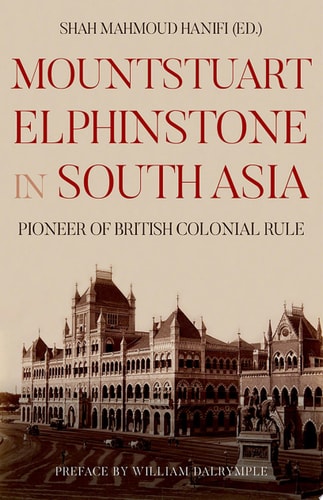
Mountstuart Elphinstone in South Asia: Pioneer of British Colonial Rule
0
0
As an Amazon Associate and affiliate partner, Menrva Books earns from qualifying purchases. Learn more
Author Description
Mountstuart Elphinstone (1779-1859), Lowland Scottish traveller, East India Company civil servant and educator, was one of the principal intellectual architects of British colonial rule in South Asia. Imbued with liberal views, such that Bombay's wealthy founded Elphinstone College in his memory, he pioneered the scholarly, scientific and administrative foundations of imperialism in India. Elphinstone's career was launched when he was picked to lead the inaugural British diplomatic mission to the Afghan court. His Account of the Kingdom of Caubul (1815) became the main source of British information about Afghanistan. He is best known for his periods as Resident at Poona and Governor of Bombay in the 1810s and 1820s, when he instituted innovative and lasting policies in administration and education while also conducting research for his extremely influential History of India (1841). This volume examines Mountstuart Elphinstone's intellectual contributions and administrative career in their own right, in relation to prominent contemporaries including Charles Metcalfe and William Moorcroft, and in the context of later historical study of India, Afghanistan, British imperialism and its imperial frontiers.
Menrva's Summary
THE THESIS
This volume investigates the intellectual and administrative legacy of Mountstuart Elphinstone, questioning how his specific liberal ideologies and scholarly pursuits shaped the foundational structures of British colonial rule in South Asia. Shah Mahmoud Hanifi, a scholar specializing in Afghan and South Asian history, utilizes primary source documents and historical records to analyze Elphinstone's career. The work situates Elphinstone within the broader context of 19th-century imperialism, examining his diplomatic missions, his tenure as Governor of Bombay, and his contributions to historical writing. By comparing Elphinstone to contemporaries like Charles Metcalfe, the author constructs a framework for understanding the intersection of colonial administration and academic research.
THE SCOPE MAP
What You Will Find
- Analysis of the 1808 British diplomatic mission to the Afghan court.
- Examination of administrative and educational policies implemented during the Bombay governorship.
- Comparative studies of Elphinstone, Charles Metcalfe, and William Moorcroft.
- Evaluation of the impact of 'Account of the Kingdom of Caubul' and 'History of India' on colonial knowledge production.
Scope Limits
- The text does not provide a comprehensive biography of Elphinstone's personal life outside of his professional and intellectual spheres.
- The analysis focuses primarily on the British colonial perspective rather than indigenous resistance movements in detail.
THE AUTHORITY PERSPECTIVE
Scholars and historians recognize this text as a significant contribution to the study of colonial intellectual history and the formation of British imperial policy in India. Readers frequently note the academic density of the prose, which serves as a rigorous examination of the intersection between colonial governance and scholarly output.
Page Count:
459
Publication Date:
2019-01-01
Publisher:
Oxford University Press
ISBN-10:
0190092653
ISBN-13:
9780190092658
History
Biography
European History
Asian History
Imperialism
British History
Great Britain
Community Tags
Similar Books