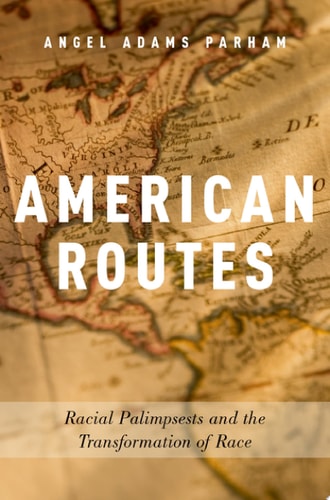
American Routes: Racial Palimpsests and the Transformation of Race
0
0
As an Amazon Associate and affiliate partner, Menrva Books earns from qualifying purchases. Learn more
Author Description
American Routes provides a comparative and historical analysis of the migration and integration of white and free black refugees from nineteenth century St. Domingue/Haiti to Louisiana and follows the progress of their descendants over the course of two hundred years. The refugees reinforced Louisiana's tri-racial system and pushed back the progress of Anglo-American racialization by several decades. But over the course of the nineteenth century, the ascendance of the Anglo-American racial system began to eclipse Louisiana's tri-racial Latin/Caribbean system. The result was a racial palimpsest that transformed everyday life in southern Louisiana. White refugees and their descendants in Creole Louisiana succumbed to pressure to adopt a strict definition of whiteness as purity that conformed to standards of the Anglo-American racial system. Those of color, however, held on to the logic of the tri-racial system which allowed them to inhabit an intermediary racial group that provided a buffer against the worst effects of Jim Crow segregation. The St. Domingue/Haiti migration case foreshadows the experiences of present-day immigrants of color from Latin-America and the Caribbean, many of whom chafe against the strictures of the binary U.S. racial system and resist by refusing to be categorized as either black or white. The St. Domingue/Haiti case study is the first of its kind to compare the long-term integration experiences of white and free black nineteenth century immigrants to the U.S. In this sense, it fills a significant gap in studies of race and migration which have long relied on the historical experience of European immigrants as the standard to which all other immigrants are compared.
Menrva's Summary
THE THESIS
How did the migration of refugees from nineteenth-century St. Domingue to Louisiana reshape the racial landscape of the American South over two centuries? Angel Adams Parham, a sociologist specializing in race and migration, utilizes historical records and comparative analysis to examine the collision between Louisiana's tri-racial system and the binary Anglo-American racial framework. The book argues that this historical case study provides a critical lens for understanding how contemporary immigrants from Latin America and the Caribbean navigate and resist the rigid racial categorizations of the United States.
THE SCOPE MAP
What You Will Find
- Comparative analysis of white and free black refugee integration patterns.
- Historical examination of the nineteenth-century St. Domingue to Louisiana migration.
- Theoretical framework of the 'racial palimpsest' to explain shifting social hierarchies.
- Longitudinal study of descendant experiences over two hundred years.
Scope Limits
- The analysis is geographically focused on southern Louisiana and does not provide a comprehensive national history of U.S. racialization.
- The study does not cover the experiences of enslaved populations who arrived through different mechanisms than the free refugee groups.
THE AUTHORITY PERSPECTIVE
Scholars in sociology and history identify this work as a significant contribution to migration studies for its departure from the traditional European-centric immigrant model. Readers frequently note the academic density of the prose and the precision with which the author applies sociological theory to historical data.
Page Count:
296
Publication Date:
2017-04-18
Publisher:
Oxford University Press
ISBN-10:
0190624752
ISBN-13:
9780190624750
History
Race Relations
Haitians
American Studies
Sociology
Migration Studies
African Americans
Caribbean Studies
Haiti history
Whites
Creoles
United States
Ethnic Studies
Community Tags
Other Editions(2)
Similar Books