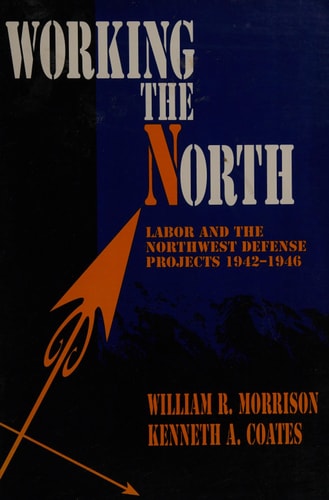
Working the North: Labor and the Northwest Defense Projects, 1942-1946
0
0
As an Amazon Associate and affiliate partner, Menrva Books earns from qualifying purchases. Learn more
Author Description
They came north like a storm surge of humanity, those wartime workers driven by the forces of World War II. Men and women, black and white, civilian and military, they outnumbered and effectively overwhelmed the largely Native population of Canada's northwest. Under harsh and unfamiliar conditions, they built what the war effort needed--airfields, roads, pipelines. Then, like a storm tide when the winds have passed, they receded from the North, leaving both the terrain and themselves forever changed. To use their own description, in these pages Canadian historian Ken Coates and Bill Morrison, "explore the realities of the experience of northern workers" of the time. They aim to record the uncommon efforts of the common people so often left out of history texts, and they incorporate the workers' own recollections and documents as well as the official records scattered throughout archives in the North and in the national capitals of Canada and the United States. Thus "Working in the North" captures an intimacy and level of anecdotal experience rarely found in scholarly studies of the period. The realities of experience meant more than just learning to cope with bitter cold in winter, endless mud and mosquitoes in summer. What could the workers do for recreation? How could they organize? What happened in the old villages invaded by thousands of newcomers? The authors pursue questions rarely discussed in histories of the North, giving special attention to the important role of the military labor battalions and their often-strained relations with their civilian counterparts. They also present important information about the role of women in the work force and the participation of the resident Native people. The workers were a unique group from across the continent who responded in a variety of ways to the subarctic conditions they encountered. "Working in the North" tells the story of their experiences in the North and recognizes the significance of their
Menrva's Summary
THE THESIS
of this book is that the massive influx of wartime workers into Canada's Northwest during World War II profoundly altered both the region and the lives of the individuals involved.** Coates and Morrison, both historians with expertise in Canadian history, examine the experiences of these common people who built critical infrastructure like airfields, roads, and pipelines under extreme conditions. Drawing on archival records from Canada and the United States, as well as the workers' own recollections and documents, the authors aim to capture the realities of their lives, including their struggles with the subarctic environment, their recreational activities, their attempts at organization, and their interactions with resident Native populations and military labor battalions.
THE SCOPE MAP
- The experiences of civilian and military workers, black and white, who moved north for wartime projects.
- The construction of airfields, roads, and pipelines in Canada's Northwest during World War II.
- The impact of the workers on the largely Native populations of the region.
- Analysis of workers' recreation, organization, and daily life under harsh conditions.
- The role of military labor battalions and their relations with civilian workers.
- The participation of women and resident Native people in the workforce.
- The lasting changes to both the terrain and the individuals involved.
THE AUTHORITY PERSPECTIVE
The book is presented as a scholarly study that aims to capture the intimate, anecdotal experiences of common people often overlooked in historical texts. By incorporating workers' own recollections and documents alongside official records, it seeks to provide a level of detail rarely found in histories of the North. The authors' focus on rarely discussed aspects of life in the North, such as recreation and social interactions, suggests a comprehensive approach to understanding the human element of these large-scale defense projects. The work highlights the significance of the workers' response to the subarctic conditions and their varied experiences.
Page Count:
270
Publication Date:
1994-01-01
Publisher:
University of Alaska Press
ISBN-10:
0912006730
ISBN-13:
9780912006734
Non-Fiction
History
Military History
Social History
Community Tags
Similar Books






Reader Comments
Share Your Thoughts
No comments yet. Be the first to share your thoughts!