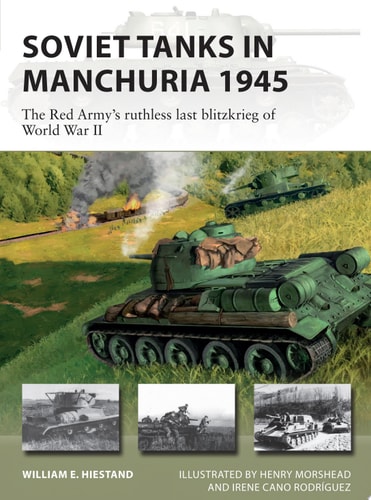
Soviet Tanks in Manchuria 1945
0
0
As an Amazon Associate and affiliate partner, Menrva Books earns from qualifying purchases. Learn more
Author Description
A new illustrated study of the devastating, but little-known, Soviet armored blitzkrieg against the Japanese in the last weeks of World War II, and how it influenced Soviet tank doctrine as the Cold War dawned. Although long overshadowed in the West by the dropping of the atomic bombs on Hiroshima and Nagasaki, the USSR's lightning strike into Manchuria in August 1945 was one of the most successful and unique campaigns of the era. Soviet forces, led by over 5,500 tanks and self-propelled guns, attacked across huge distances and deserts, marshes, and mountains to smash Japan's million-strong Kwantung Army in a matter of days. Japanese forces were short of training and equipment, but nevertheless fought fiercely, inflicting 32,000 casualties on the Soviets. Red Army operations were characterized by surprise, speed, and deep penetrations by tank-heavy forces born of the brutal lessons they had learned during years fighting the Wehrmacht. Lessons from the campaign directly shaped Soviet Cold War force structure and planning for mechanized operations against the West. Illustrated with contemporary artwork and rare photos from one of the best collections of Soviet military photos in the West, this fascinating book explains exactly how the last blitzkrieg of World War II was planned, fought, and won, and how it influenced the Red Army's plans for tank warfare against NATO in Europe.
Menrva's Summary
THE THESIS
The Soviet Union launched a massive, yet largely unknown, armored offensive against Japan in the final weeks of World War II, significantly impacting Soviet tank doctrine as the Cold War began. This study details the USSR's lightning strike into Manchuria in August 1945, a campaign that saw over 5,500 tanks and self-propelled guns deployed to crush Japan's Kwantung Army. Despite fierce resistance and significant Soviet casualties, the operation demonstrated surprise, speed, and deep penetrations, drawing directly from the harsh lessons learned fighting the Wehrmacht. The campaign's outcomes directly shaped Soviet Cold War military planning and force structure for mechanized warfare against NATO.
THE SCOPE MAP
- Detailed analysis of the Soviet armored blitzkrieg against Japan in Manchuria, August 1945.
- Examination of the over 5,500 Soviet tanks and self-propelled guns deployed in the campaign.
- Discussion of the Japanese Kwantung Army's strength, equipment, and fierce resistance.
- Explanation of the planning, execution, and strategic outcomes of the final blitzkrieg of World War II.
- Analysis of how the campaign's lessons influenced Soviet tank doctrine and Cold War military planning.
- Inclusion of contemporary artwork and rare photographs from prominent Western collections of Soviet military imagery.
THE AUTHORITY PERSPECTIVE
This book offers a detailed examination of a pivotal, yet often overlooked, campaign in the final days of World War II. The author draws upon extensive photographic and artistic evidence to illustrate the strategic and tactical aspects of the Soviet offensive into Manchuria. The work highlights the campaign's direct influence on Soviet tank doctrine and its implications for Cold War military planning against NATO. It aims to provide a comprehensive understanding of this unique armored operation and its lasting impact on military history.
Page Count:
48
Publication Date:
2023-03-16
Publisher:
Bloomsbury UK
ISBN-10:
147285375X
ISBN-13:
9781472853752
Non-Fiction
History
Cold War
Japan
Soviet Union
Armor
Military History
Community Tags
Similar Books