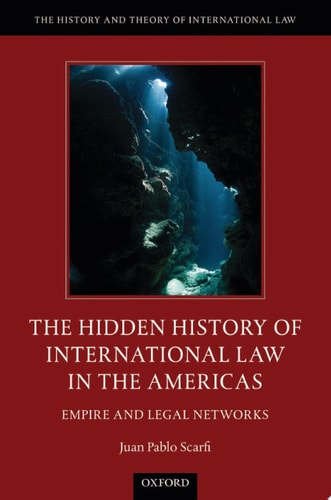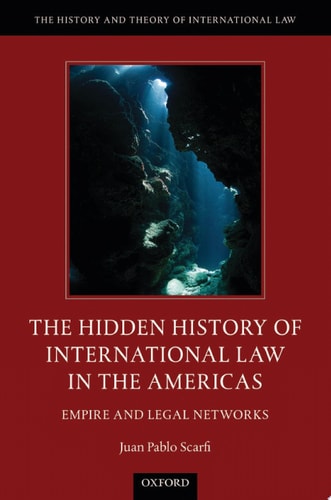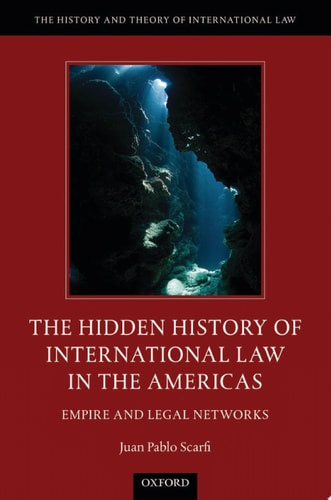
The Hidden History of International Law in the Americas: Empire and Legal Networks
0
0
As an Amazon Associate and affiliate partner, Menrva Books earns from qualifying purchases. Learn more
Author Description
International law has played a crucial role in the construction of imperial projects. Yet within the growing field of studies about the history of international law and empire, scholars have seldom considered this complicit relationship in the Americas. The Hidden History of International Law in the Americas offers the first exploration of the deployment of international law for the legitimization of U.S. ascendancy as an informal empire in Latin America. This book explores the intellectual history of a distinctive idea of American international law in the Americas, focusing principally on the evolution of the American Institute of International Law (AIIL). This organization was created by U.S. and Chilean jurists James Brown Scott and Alejandro Alvarez in Washington D.C. for the construction, development, and codification of international law across the Americas. Juan Pablo Scarfi examines the debates sparked by the AIIL over American international law, intervention and non-intervention, Pan-Americanism, the codification of public and private international law and the nature and scope of the Monroe Doctrine, as well as the international legal thought of Scott, Alvarez, and a number of jurists, diplomats, politicians, and intellectuals from the Americas. Professor Scarfi argues that American international law, as advanced primarily by the AIIL, was driven by a U.S.-led imperial aspiration of civilizing Latin America through the promotion of the international rule of law. By providing a convincing critical account of the legal and historical foundations of the Inter-American System, this book will stimulate debate among international lawyers, IR scholars, political scientists, and intellectual historians.
Menrva's Summary
THE THESIS
This book investigates how international law functioned as a mechanism for legitimizing United States imperial expansion and informal hegemony within the Americas during the early twentieth century. Dr. Juan Pablo Scarfi, an expert in the intellectual history of international law, utilizes archival research and the records of the American Institute of International Law (AIIL) to construct his argument. He posits that the promotion of a specific, U.S.-led version of international law served as a civilizing project designed to consolidate American influence over Latin American legal and political systems.
THE SCOPE MAP
What You Will Find
- An analysis of the American Institute of International Law (AIIL) and its foundational figures, James Brown Scott and Alejandro Alvarez.
- A historical examination of the evolution of the Monroe Doctrine and the concept of Pan-Americanism.
- A critical review of legal debates regarding intervention, non-intervention, and the codification of public and private international law.
Scope Limits
- The text focuses primarily on the intellectual and legal contributions of elite jurists and diplomats rather than grassroots or popular movements.
- It does not provide an exhaustive history of all Inter-American relations, concentrating instead on the specific legal networks that facilitated imperial aspirations.
THE AUTHORITY PERSPECTIVE
Scholars in the fields of international relations and legal history identify this work as a significant contribution to understanding the intersection of law and empire in the Western Hemisphere. Readers frequently note the academic density of the prose and the meticulous archival research that supports the author's critical framework.
Page Count:
280
Publication Date:
2017-04-12
Publisher:
Oxford University Press
ISBN-10:
0190622342
ISBN-13:
9780190622343
History
American Studies
Intellectual History
Law america
Imperialism
International Law
Community Tags
Similar Books