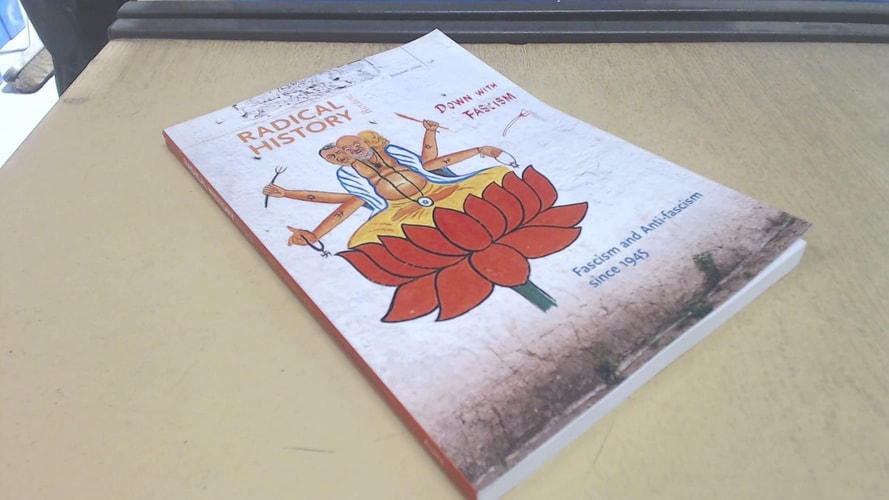
Fascism and Antifascism Since 1945
0
0
As an Amazon Associate and affiliate partner, Menrva Books earns from qualifying purchases. Learn more
Author Description
Contributors to this special issue of Radical History Review study histories of fascism and antifascism after 1945 to show how fascist ideology continues to circulate and be opposed transnationally despite its supposed death at the end of World War II. The essays cover the use of fascism in the 1970s construction of the Latinx Left, the connection of antifascism and anti-imperialism in 1960s Italian Communist internationalism, post-dictatorship Argentina and the transhistorical alliance between Las Madres and travestí activism, cultures of antifascism in contemporary Japan, and global fascism as portrayed through the British radical right's attempted alliance with Qathafi's Libya. The issue also includes a discussion about teaching fascism through fiction in the age of Trump, a reflection on the practices of archiving and displaying antifascist objects to various publics, and reviews of recent works on antifascism, punk music, and the Rock Against Racism movement. Contributors. Benjamin Bland, Mark Bray, Rosa Hamilton, Jessica Namakkal, Giulia Riccò, Cole Rizki, Eric Roubinek, Antonino Scalia, Stuart Schrader, Vivian Shaw, Michael Staudenmaier
Menrva's Summary
THE THESIS
This collection examines the enduring legacy and transnational circulation of fascist ideology and its opposition in the post-World War II era. The essays explore diverse historical and geographical contexts, demonstrating how fascism has continued to manifest and be challenged globally despite its defeat in 1945. The contributors investigate its influence on political movements, cultural practices, and activist alliances across different decades and continents. The volume also considers pedagogical approaches to teaching fascism and the significance of archiving antifascist materials.
THE SCOPE MAP
- Histories of fascism and antifascism after 1945
- Transnational circulation of fascist ideology
- Fascism's use in the 1970s construction of the Latinx Left
- Antifascism and anti-imperialism in 1960s Italian Communist internationalism
- Post-dictatorship Argentina and alliances between Las Madres and travestí activism
- Cultures of antifascism in contemporary Japan
- Global fascism through the British radical right's attempted alliance with Qathafi's Libya
- Teaching fascism through fiction in the age of Trump
- Archiving and displaying antifascist objects
- Reviews of recent works on antifascism, punk music, and the Rock Against Racism movement
THE AUTHORITY PERSPECTIVE
This special issue of Radical History Review brings together scholars to analyze the persistent presence of fascist ideologies and the ongoing struggles against them since the end of World War II. The essays offer a transnational perspective, tracing the evolution and opposition of fascism across various regions and historical periods. The collection highlights connections between antifascism and other political movements, such as anti-imperialism and LGBTQ+ activism. It also addresses contemporary issues like teaching fascism and preserving its history through material culture.
Page Count:
198
Publication Date:
2021-05-01
Publisher:
Duke University Press
ISBN-10:
1478011572
ISBN-13:
9781478011576
History
Politics
Non-Fiction
Community Tags
Similar Books














