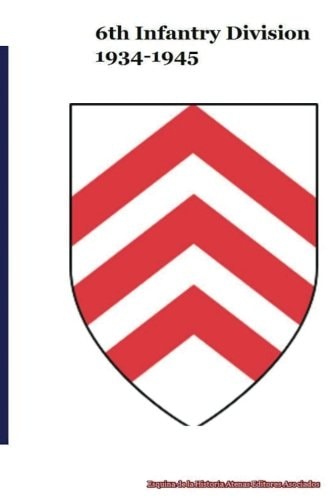
6th Infantry Division 1934-1945
0
0
As an Amazon Associate and affiliate partner, Menrva Books earns from qualifying purchases. Learn more
Author Description
The 6th Infantry Division (6. Infanterie-Division) was a unit of the German Army during World War II. Formed in October 1934 from Infanteriefhrer V in Bielefeld, the division was mobilized on 26 August 1939 for the upcoming invasion of Poland. At that time, it consisted of the usual German infantry division elements: three infantry regiments of three battalions each, one three-battalion regiment of light artillery, one battalion of heavy artillery (from a separate artillery regiment, but attached to the particular division), a Panzerjger (anti-tank) Battalion, a reconnaissance (Aufklrungs) Battalion, a Signals Battalion, a Pioneer (Engineer) Battalion, and divisional supply, medical, and administrative units. In 1944 the division was first renamed 6. Grenadier-Division (25 July 1944) and again in 6. Volksgrenadier-Division (9 October 1944). The division was destroyed during the Soviet Vistula-Oder Offensive in January 1945 and reestablished as 6. Infanterie-Division (10 March 1945) using elements of Shadow Division Dresden.
Menrva's Summary
THE THESIS
This book chronicles the history of the 6th Infantry Division of the German Army during World War II, from its formation in 1934 to its destruction and reestablishment in 1945. The division was initially formed in Bielefeld and mobilized for the invasion of Poland in 1939, comprising standard infantry and artillery regiments, an anti-tank battalion, a reconnaissance battalion, and support units. Throughout the war, it underwent significant reorganizations, being renamed the 6. Grenadier-Division in July 1944 and the 6. Volksgrenadier-Division in October 1944. The division faced intense combat, ultimately being destroyed during the Soviet Vistula-Oder Offensive in January 1945 before being reestablished.
THE SCOPE MAP
- Formation of the 6th Infantry Division in October 1934 from Infanteriefhrer V in Bielefeld.
- Mobilization for the invasion of Poland in August 1939.
- Composition of the division in 1939: three infantry regiments, light and heavy artillery, anti-tank, reconnaissance, signals, and pioneer battalions, plus support units.
- Renaming to 6. Grenadier-Division on July 25, 1944.
- Further renaming to 6. Volksgrenadier-Division on October 9, 1944.
- Destruction during the Soviet Vistula-Oder Offensive in January 1945.
- Reestablishment as 6. Infanterie-Division on March 10, 1945, using elements of Shadow Division Dresden.
THE AUTHORITY PERSPECTIVE
This detailed historical account focuses on the operational history and organizational changes of the 6th Infantry Division throughout World War II. The text outlines the division's structure, key engagements, and transformations, providing a chronological record of its existence. The material suggests a focus on military logistics, unit composition, and the impact of major offensives on the division's fate. It serves as a factual record for those interested in the German Army's structure and campaigns during the conflict.
Page Count:
242
Publication Date:
2017-02-01
Publisher:
CreateSpace Independent Publishing Platform
ISBN-10:
1544190697
ISBN-13:
9781544190693
Non-Fiction
History
Military History
Community Tags
Similar Books