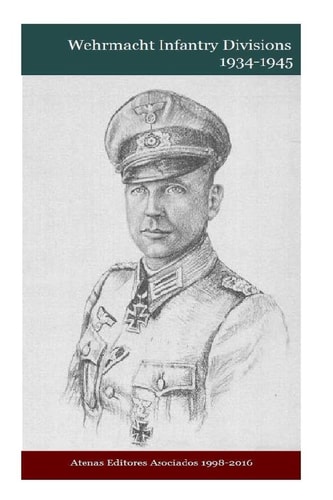
Wehrmacht Infantry Divisions 1934-1945
0
0
As an Amazon Associate and affiliate partner, Menrva Books earns from qualifying purchases. Learn more
Author Description
The 1939 German infantry division bears an amazing similarity to the German infantry division of 1918. The infantry battalions had shed a rifle company and the infantry regiments had acquired an infantry gun company. The cavalry squadron was reduced to a platoon. The pioneers sent their mortars to the infantry battalions' heavy companies and acquired a third pioneer company. The artillery was fundamentally unchanged.The divisions still contained a Feldersatz (replacement) battalion, and the signals command had become a full battalion organized with two full companies, one radio and one telephone.The support units remained surprisingly similar as well, though the tail became heavier in terms of transportation columns. Germany began World War II with the infantry divisions it had developed with the lessons ofWorldWar I. These lessons, however, would soon be replaced by new ones, and the process of reorganizing the infantry division to meet new conditions began afresh. After the beginning of World War II the German line infantry divisions underwent two major organizational changes, the Type 44 division and theVolks Grenadier division. There were a number of different types of divisions organized - Jager divisions, mountain divisions, Sperr divisions, garrison divisions and security divisions - plus a wide variety of training, reserve and recruit divisions.These were, however, specialized divisions and not intended to fight in the field. Their organizations, though covered in this and successive volumes, are considered separately since they were not part of the line division. The first major organizational change in the line divisions from the 1939 organization occurred with the introduction of the "Neues Art" or Type 44 division. The principal changes were that in the Type 44 division the number of battalions in the infantry regiments was reduced from three to two and that the reconnaissance battalion was replaced by a fusilier battalion.The second major change was the
Menrva's Summary
THE THESIS
This book investigates the organizational evolution of the German Wehrmacht's infantry divisions from their inception in 1934 through the end of World War II in 1945. It details the initial structure of these divisions, heavily influenced by World War I lessons, and traces the subsequent modifications made in response to the realities of modern warfare. The work examines the key organizational changes, such as the Type 44 and Volks Grenadier divisions, and differentiates these from specialized units not intended for front-line combat.
THE SCOPE MAP
- The organizational structure of German infantry divisions in 1939, highlighting similarities to WWI divisions.
- Details on changes to infantry battalions, regiments, cavalry squadrons, and pioneer units.
- The composition of artillery, replacement, and signals units.
- An examination of the evolution of support units and transportation columns.
- Analysis of the major organizational shifts: the "Neues Art" or Type 44 division and the Volks Grenadier division.
- A discussion of specialized divisions (Jager, mountain, Sperr, garrison, security) and their distinct organizations.
- Coverage of training, reserve, and recruit divisions.
THE AUTHORITY PERSPECTIVE
The book provides a detailed account of the Wehrmacht's infantry division structures across a significant period of military history. Its focus on organizational changes and the influence of wartime experience suggests a text aimed at military history enthusiasts and researchers. The detailed breakdown of unit compositions and modifications indicates a thorough approach to the subject matter, likely appealing to those interested in the technical aspects of military organization.
Page Count:
426
Publication Date:
2016-07-13
Publisher:
CreateSpace Independent Publishing Platform
ISBN-10:
1537339818
ISBN-13:
9781537339818
History
Non-Fiction
Military History
Community Tags
Similar Books