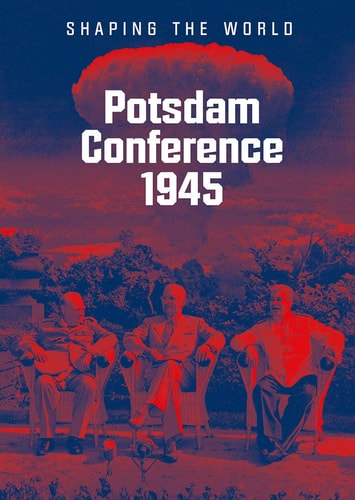
Potsdam Conference 1945: Shaping the World
0
0
As an Amazon Associate and affiliate partner, Menrva Books earns from qualifying purchases. Learn more
Author Description
The Potsdam Conference marked-and still today marks-the end of the Second World War and the beginning of the Cold War. The discussions and negotiations held at Cecilienhof Palace from 17 July to 2 August 1945 staked out zones and spheres of influence and had a political impact on the post-war period that reached far beyond Europe. The volume shows how the Big Three-Churchill, Truman and Stalin-reached their resolutions. And it highlights what effects these resolutions had not only on the defeated Germans, but also on the Chinese, Japanese and Koreans who were still at war; on the displaced persons and Holocaust survivors who had no voice in Potsdam; on the Persians whose fate was decided without consulting their interests or wishes; and on the French who were among the victorious powers but had not been invited to the conference. The Potsdam Agreement subsequently signed by the three heads of state thus laid the foundations for the reorganisation of the world.
Menrva's Summary
THE THESIS
The Potsdam Conference of 1945 served as the pivotal event marking the conclusion of World War II and the dawn of the Cold War. The discussions and negotiations at Cecilienhof Palace between July 17 and August 2, 1945, determined post-war geopolitical landscapes by establishing zones and spheres of influence. This volume examines how the Allied leaders—Churchill, Truman, and Stalin—arrived at their decisions and explores the profound impact these resolutions had on various populations, including the defeated Germans, warring Chinese, Japanese, and Koreans, displaced persons, Holocaust survivors, and the French, whose interests were largely unaddressed.
THE SCOPE MAP
- An examination of the key discussions and negotiations at the Potsdam Conference.
- Analysis of the resolutions reached by the Big Three: Churchill, Truman, and Stalin.
- Exploration of the political impact on the post-war period, extending beyond Europe.
- Detailed accounts of the effects on various groups, including Germans, Chinese, Japanese, Koreans, displaced persons, Holocaust survivors, and the French.
- Discussion of how the Potsdam Agreement laid the foundations for global reorganization.
THE AUTHORITY PERSPECTIVE
The book examines the critical Potsdam Conference, highlighting its role in concluding World War II and initiating the Cold War. It details the decisions made by Churchill, Truman, and Stalin and analyzes their far-reaching consequences for diverse populations and geopolitical structures. The work emphasizes the impact on those directly affected by the war and its aftermath, as well as those whose interests were sidelined in the negotiations. The Potsdam Agreement's foundational role in reshaping the world order is thoroughly explored.
Page Count:
263
Publication Date:
2020-01-01
Publisher:
Sandstein
ISBN-10:
3954985470
ISBN-13:
9783954985470
Politics
Non-Fiction
History
Community Tags
Similar Books














