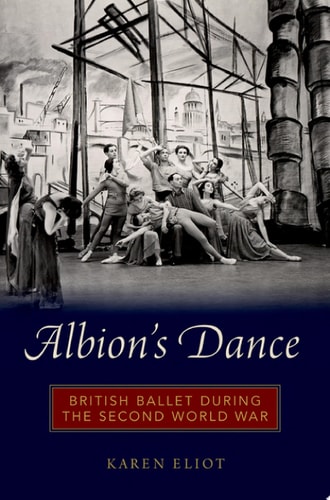
Albion's Dance: British Ballet during the Second World War
0
0
As an Amazon Associate and affiliate partner, Menrva Books earns from qualifying purchases. Learn more
Author Description
When the Second World War broke out, ballet in Britain was only a few decades old. Few had imagined that it would establish roots in a nation long thought to be unresponsive to dance. Nevertheless, the war proved to be a boon for ballet dancers, choreographers and audiences, for the nation's dancers were forced to look inward to their own identity and sources of creativity. As author Karen Eliot demonstrates in this fascinating book, instead of withering during the enforced isolation of war, ballet in Britain flourished, exhibiting a surprising heterogeneity and vibrant populism that moved ballet outside its typical elitist surroundings to be seen by uninitiated, often enthusiastic audiences. Ballet was thought to help boost audience morale, to render solace to the soul-weary and to afford entertainment and diversion to those who simply craved a few hours of distraction. Government authorities came to see that ballet could serve as a tool of propaganda; the ways it functioned within the larger public discourse of propaganda and sacrifice, and how it answered a public mood of pragmatism and idealism, are also topics in this story of the development of a national ballet identity. This narrative has several key players-- dance critics, male and female dancers, producers, audiences, and choreographers. Exploring the so-called "ballet boom" during WWII, the larger story of this book is one of how art and artists thrive during conflict, and how they respond pragmatically and creatively to privation and duress.
Menrva's Summary
THE THESIS
How did British ballet manage to flourish and establish a national identity during the restrictive conditions of the Second World War? Author Karen Eliot examines the intersection of artistic development and wartime necessity, arguing that the isolation forced by the conflict compelled British dancers and choreographers to cultivate a unique, populist identity. By analyzing the role of ballet as both a morale-boosting tool and a form of propaganda, Eliot demonstrates how the art form transitioned from an elitist pursuit to a widely accessible cultural phenomenon.
THE SCOPE MAP
What You Will Find
- Historical analysis of the British "ballet boom" between 1939 and 1945.
- Examination of the relationship between government propaganda and artistic performance.
- Case studies of key figures including dancers, choreographers, and critics.
Scope Limits
- The text does not provide a comprehensive history of British ballet outside of the specific wartime period.
- It does not focus on the technical evolution of dance steps or choreography styles, but rather the sociological and cultural context of the performances.
THE AUTHORITY PERSPECTIVE
Experts recognize this work as a significant contribution to the study of wartime cultural history, noting its success in bridging the gap between dance history and social policy. Readers frequently highlight the author's ability to contextualize artistic growth within the constraints of national conflict.
Page Count:
236
Publication Date:
2016-01-01
Publisher:
Oxford University Press
ISBN-10:
0190622423
ISBN-13:
9780190622428
History
Dance
British History
Ballet
Cultural History
World War
Humanities
Great Britain
Community Tags
Similar Books