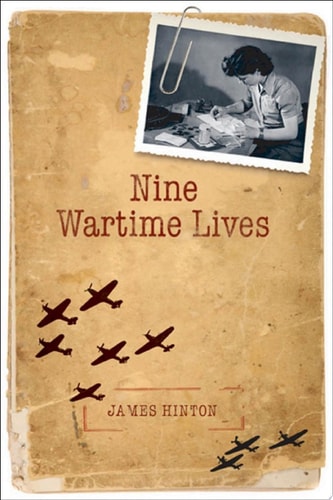
Nine Wartime Lives: Mass Observation and the Making of the Modern Self
0
0
As an Amazon Associate and affiliate partner, Menrva Books earns from qualifying purchases. Learn more
Author Description
James Hinton uses diaries kept by nine 'ordinary' people in wartime Britain to re-evaluate the social history of the Second World War, and to reflect on the twentieth-century making of the modern self. These diaries were written by some of the unusually self-reflective and public-spirited people who agreed to write intimate journals about their daily activity for the social research organisation, Mass Observation. One of the nine diarists discussed is Nella Last, whose published diaries have been a source of delight and fascination for many thousands of readers. Alongside her there are chapters on eight other Mass Observers, each in their own way as vivid, interesting, and surprising as Nella herself. A central insight underpins the book: in seeking to make the best of our own lives, each of us makes selective use of the resources of our shared culture in a unique way; and, in so doing, we contribute, however modestly, to molecular processes of historical change. Placing individuals at the centre of his analysis, James Hinton probes the impact of war on attitudes to citizenship, the changing relationships between men and women, and the search for meanings in life that could transcend the wartime context of limitless violence. Consistently sensitive, thoughtful and often moving, this beautifully written book resists nostalgic contrasts between the presumed dutiful citizenship of wartime Britain and contemporary anti-social individualism, pointing instead to longer run processes of change rooted as much in struggles for personal autonomy in the private sphere as in the politics of active citizenship in public life.
Menrva's Summary
THE THESIS
How did the experience of ordinary individuals in wartime Britain contribute to the broader evolution of the modern self and social identity? James Hinton, a historian specializing in British social history, utilizes the Mass Observation archive to examine the personal diaries of nine citizens. He argues that these private reflections reveal how individuals navigated the tension between public duty and personal autonomy, suggesting that historical change is a cumulative result of individual efforts to find meaning within a shared culture.
THE SCOPE MAP
What You Will Find
- Analysis of nine specific diaries from the Mass Observation collection.
- Examination of gender dynamics and citizenship during the Second World War.
- Exploration of the search for personal meaning amidst systemic violence.
- Discussion of the transition from wartime collectivism to contemporary individualism.
Scope Limits
- The study is restricted to the specific perspectives of nine self-selected Mass Observers.
- It does not provide a comprehensive military or political history of the war.
THE AUTHORITY PERSPECTIVE
Historians and sociologists frequently cite this work for its nuanced approach to archival research and its focus on the intersection of private life and public history. Scholars note that the text provides a sophisticated counter-narrative to traditional accounts of wartime national unity.
Page Count:
273
Publication Date:
2010-01-01
Publisher:
OUP Oxford
ISBN-10:
0191610283
ISBN-13:
9780191610288
History
Biography
Great Britain
Social History
European History
World War
Sociology
British History
Community Tags
Similar Books