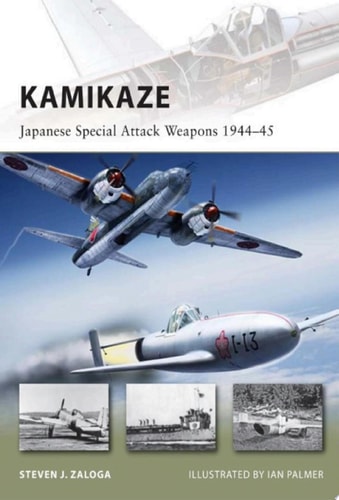
Kamikaze Japanese Special Attack Weapons 1944–45
0
0
As an Amazon Associate and affiliate partner, Menrva Books earns from qualifying purchases. Learn more
Author Description
Following the destruction of much of the Japanese fleet and air arms in the later half of 1944, in desperation, the Imperial Japanese Navy proposed using "special attack" formations, or suicide attacks. These initially consisted of crude improvisations of conventional aircraft fitted with high-explosive bombs that could be crashed into US warships. Called "Divine Wind" (Kamikaze), the special attack formations first saw action in 1944, and became the scourge of the US fleet in the battles for Iwo Jima and Okinawa in 1945. In view of the success of these attacks, the Japanese armed forces began to develop an entire range of new special attack weapons. This book examines the initial kamikaze aircraft attacks, with a focus on the dedicated special attack weapons developed in 1944. It also covers specialized suicide attack weapons such as anti-tank lunge mines.
Menrva's Summary
THE THESIS
The Imperial Japanese Navy's desperate adoption of suicide tactics in 1944-45 led to the development of specialized weapons aimed at crippling Allied warships and ground forces. Following devastating losses, Japan introduced
THE SCOPE MAP
- Examination of the initial Kamikaze aircraft attacks and their evolution.
- Focus on dedicated special attack weapons developed from 1944 onwards.
- Coverage of specialized suicide attack weapons, including anti-tank lunge mines.
- Analysis of the strategic context and desperation driving these weapon developments.
THE AUTHORITY PERSPECTIVE
This book is recognized for its detailed examination of the desperate and often brutal special attack weapons developed by Japan during the latter stages of World War II. It provides a focused look at the evolution from improvised aerial attacks to purpose-built suicide weapons. The scope covers both naval and land-based applications, offering insight into the extreme measures taken by the Imperial Japanese forces. The work is valued for its specific focus on the weaponry and the historical context of its deployment.
Page Count:
48
Publication Date:
2011-09-20
Publisher:
Bloomsbury Publishing
ISBN-10:
1780960816
ISBN-13:
9781780960814
Non-Fiction
History
Military History
Weaponry
Community Tags
Similar Books