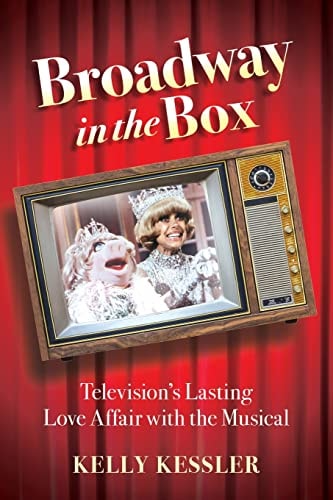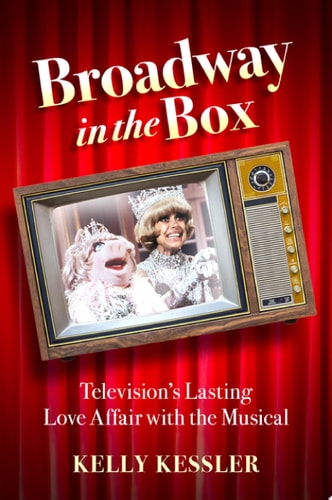
Broadway in the Box: Television's Lasting Love Affair with the Musical
0
0
As an Amazon Associate and affiliate partner, Menrva Books earns from qualifying purchases. Learn more
Author Description
It was as if American television audiences discovered the musical in the early 21st century. In 2009 Glee took the Fox Network and American television by storm with the unexpected unification of primetime programming, awkward teens, and powerful voices spontaneously bursting into song. After raking in the highest rating for a new show in the 2009-2010 season, Glee would continue to cultivate rabid fans, tie-in soundtracks and merchandising, and a spinoff reality competition show until its conclusion in 2015. Alongside Glee, NBC and Fox would crank up musical visibility with the nighttime drama Smash and a string of live musical productions. Then came ABC's comedic fantasy musical series Galavant and the CW's surprise Golden Globe darling Crazy Ex-Girlfriend. Television and the musical appeared to be a perfect match. But, as author Kelly Kessler illustrates, television had at that point been carrying on a sixty-year, symbiotic love affair with the musical. From Rodgers and Hammerstein's appearance on the first Toast of the Town telecast and Mary Martin's iconic Peter Pan airings to Barbra Streisand's 1960s CBS specials, The Carol Burnett Show, Cop Rock, Great Performances, and a string of one-off musical episodes of sitcoms, nighttime soaps, fantasy shows, and soap operas, television has always embraced the musical. Kessler shows how the form is written across the history of American television and how its various incarnations tell the stories of shifting American culture and changing television, film, and theatrical landscapes. She recounts and explores this rich, decades-long history by traversing musicals, stars, and sounds from film, Broadway, and Las Vegas to the small screen.
Menrva's Summary
THE THESIS
This book investigates the sixty-year symbiotic relationship between the American television industry and the musical genre, challenging the notion that the musical is a recent phenomenon on the small screen. Author Kelly Kessler, a scholar of media and television history, utilizes a comprehensive historical framework to demonstrate how musical elements have been woven into the fabric of American broadcasting since its inception. By analyzing diverse formats ranging from variety specials to scripted dramas, she argues that the musical serves as a vital lens through which to view shifting cultural landscapes and the evolution of television production.
THE SCOPE MAP
What You Will Find
- Historical analysis of musical integration in television from the 1950s to the 2010s
- Examination of diverse formats including sitcoms, soap operas, nighttime dramas, and live broadcasts
- Case studies of iconic programs like Glee, Smash, Crazy Ex-Girlfriend, and The Carol Burnett Show
- Exploration of the intersection between Broadway, film, Las Vegas, and television production
Scope Limits
- Does not provide an exhaustive catalog of every musical episode in television history
- Focuses primarily on the American television landscape rather than international musical television traditions
THE AUTHORITY PERSPECTIVE
Experts in media studies recognize this work as a significant contribution to the understanding of genre hybridity in television. Readers frequently note the academic rigor and the breadth of the historical research presented throughout the text.
Page Count:
352
Publication Date:
2020-01-01
Publisher:
Oxford University Press
ISBN-10:
0190674040
ISBN-13:
9780190674045
Radio
Television programs
Television musicals
Cultural History
Television history
Humanities
Music History
Media Studies
Criticism history