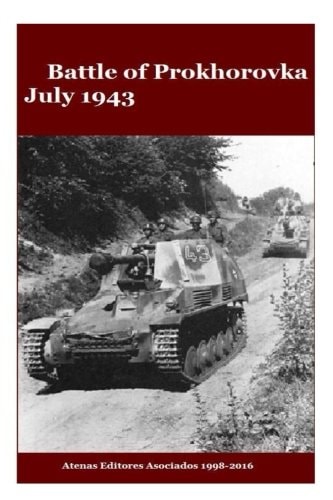
Battle of Prokhorovka July 1943
0
0
As an Amazon Associate and affiliate partner, Menrva Books earns from qualifying purchases. Learn more
Author Description
On November 5, 1916, in the midst of the First World War, Poland was made an autonomous state by Germany and Austria-Hungary. After the collapse of the German Empire in November 1918, Poland became independent and at Versailles received new boundaries which included a considerable amount of formerly German territory. By cutting off East Prussia from the rest of the Reich and by setting up the Free City of Danzig as an independent political organism, a source of conflict was created which, together with the minorities question, eventually made German-Polish relations intolerable and helped cause this war.The Versailles Treaty also sought to assure just treatment for the German minorities in Poland; but the Poles did not live up to these obligations. Complaints by the German Government, which began in November 1921 and were continually repeated, led to no improvement in the conditions under which the German communities lived. Arbitrary arrests were frequent; Germans were assassinated and the culprits often left unpunished; and German-owned lands were expropriated. As a result of all this there was a large German emigration. But the Weimar Republic, deprived of military force by the Versailles Treaty, was unable to defend German rights against Polish arrogance.
Menrva's Summary
THE THESIS
The Battle of Prokhorovka on July 5, 1943, marked a pivotal clash between German and Soviet forces during Operation Citadel. This engagement, often considered the largest tank battle in history, was a critical turning point on the Eastern Front of World War II. The German offensive aimed to encircle Soviet forces at Kursk, but the defenders, forewarned and heavily fortified, met the assault with fierce resistance. The battle's outcome significantly blunted Germany's offensive capabilities in the East, paving the way for subsequent Soviet advances.
THE SCOPE MAP
- Detailed analysis of the strategic objectives of Operation Citadel.
- Examination of the forces involved, including German Panzer divisions and Soviet tank armies.
- Reconstruction of the tactical maneuvers and engagements on the battlefield.
- Assessment of the technological and doctrinal aspects of tank warfare employed by both sides.
- Discussion of the battle's impact on the Eastern Front and the overall course of World War II.
- Inclusion of maps and diagrams illustrating troop movements and battle formations.
THE AUTHORITY PERSPECTIVE
The Battle of Prokhorovka is widely recognized by military historians as a crucial engagement that significantly altered the trajectory of the Eastern Front. Its study offers deep insights into the operational art of large-scale armored warfare and the strategic decisions made by both the German and Soviet high commands. The sheer scale of the armored forces committed and the ferocity of the fighting have cemented its place as a subject of intense historical analysis and debate among scholars and enthusiasts alike.
Page Count:
278
Publication Date:
2015-07-16
Publisher:
CreateSpace Independent Publishing Platform
ISBN-10:
1535271124
ISBN-13:
9781535271127
History
Non-Fiction
Military History
Community Tags
Similar Books