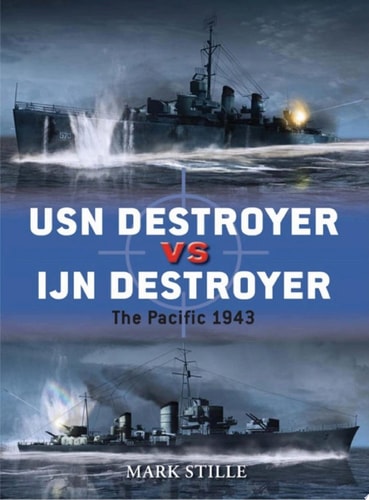
USN Destroyer vs IJN Destroyer: The Pacific 1943
0
0
As an Amazon Associate and affiliate partner, Menrva Books earns from qualifying purchases. Learn more
Author Description
This book covers the fierce night naval battles fought between the US Navy and the Imperial Japanese Navy during late 1943 as the Allies advanced slowly up the Solomons Islands toward the major Japanese naval base at Rabaul. During this period, several vicious actions were fought featuring the most modern destroyers of both navies. Throughout most of 1942, the Imperial Navy had held a marked edge and a key ingredient of these successes was their destroyer force, which combined superior training and tactics with the most capable torpedo in the world. Even into 1943 mixed Allied light cruiser/destroyer forces were roughly handled by Japanese destroyers. After these battles, the Americans decided to stop chasing Japanese destroyers with cruisers so the remainder of the battles in 1943 (with one exception) were classic destroyer duels. This book explores the Americans' technical edge provided to them by radar, and now added new, more aggressive tactics. The final result was the defeat of the Imperial Navy's finely trained destroyer force and the demonstration that the Japanese were unable to stop the Allies' advance.
Menrva's Summary
THE THESIS
This book examines the critical naval engagements between US and Imperial Japanese destroyers in the Pacific theater during late 1943. It details the fierce night battles fought as the Allies advanced through the Solomons towards Rabaul, featuring the most modern destroyers of both navies. The narrative explores the shift in naval tactics, the impact of American radar technology, and the eventual defeat of Japan's destroyer force, which had previously held a significant advantage.
THE SCOPE MAP
- Analysis of night naval battles between USN and IJN destroyers in late 1943.
- Exploration of the Imperial Japanese Navy's destroyer force, its superior torpedoes, training, and tactics.
- Examination of the US Navy's adoption of radar technology and new aggressive tactics.
- Detailed accounts of classic destroyer duels, including the shift away from using cruisers to engage destroyers.
- Discussion of the strategic context of the Allied advance up the Solomons towards Rabaul.
- Assessment of the factors leading to the defeat of the IJN destroyer force and the demonstration of Allied naval superiority.
THE AUTHORITY PERSPECTIVE
This work provides a focused analysis of a specific, crucial period in the Pacific naval war, detailing the technological and tactical shifts that led to American dominance. It highlights the evolution of destroyer warfare and the strategic implications of these engagements. The book's detailed examination of destroyer duels and the impact of radar offers valuable insights for students of naval history. The narrative concludes by underscoring the decisive nature of these battles in enabling the Allied advance.
Page Count:
80
Publication Date:
2012-11-20
Publisher:
Bloomsbury Publishing
ISBN-10:
1780961197
ISBN-13:
9781780961194
Non-Fiction
History
Naval history
Pacific Theater
Military History
Community Tags
Similar Books