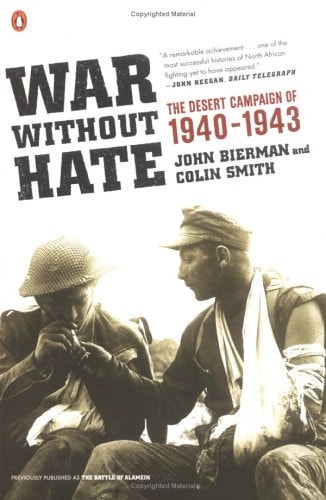
War Without Hate: The Desert Campaign of 1940-1943
0
0
As an Amazon Associate and affiliate partner, Menrva Books earns from qualifying purchases. Learn more
Author Description
The battle of Alamein was the turning point for the British in their World War II struggle against Nazi Germany and the climax of a campaign waged with an unusual degree of ferocity and humanity on both sides. Around the little railway stop of El Alamein in Egypt's western desert at the end of October 1942, there were virtually no towns or villages to be ruined or terrified refugees to be caught in the crossfire. The twelve-day battle was waged over empty desert terrain. However bitterly fought, though, it was conducted according to accepted notions of "fair play" and the rules of war. Each side treated the enemy prisoners -- especially the wounded -- according to the Geneva Conventions, and a curious camaraderie evolved between the armies doing their best to kill each other. This desert war is remembered by its survivors as a "war without hate." Drawing extensively on years of research, John Bierman and Colin Smith provide a compellingly fresh perspective on the see-saw campaign in which the two sides.
Menrva's Summary
THE THESIS
The North African campaign of World War II was characterized by a unique blend of intense combat and surprising adherence to the rules of war. This conflict, primarily fought in the desolate desert terrain of Egypt and Libya between 1940 and 1943, saw British and Axis forces engage in a brutal struggle for control. Despite the ferocity of the battles, such as the pivotal Battle of El Alamein, both sides largely observed the Geneva Conventions, treating prisoners and the wounded with a degree of humanity that fostered an unusual camaraderie. The campaign is remembered by veterans as a 'war without hate,' a testament to the peculiar code of conduct that emerged amidst the desert sands.
THE SCOPE MAP
- Detailed account of the desert campaign in North Africa from 1940 to 1943.
- Focus on the Battle of El Alamein as a turning point in the war.
- Exploration of the unusual adherence to the rules of war and humanitarian treatment of prisoners.
- Analysis of the 'war without hate' sentiment among combatants.
- Insights drawn from extensive research and veteran accounts.
- Examination of the see-saw nature of the campaign between opposing forces.
THE AUTHORITY PERSPECTIVE
This historical account is recognized for its fresh perspective on the North African campaign, particularly highlighting the paradoxical combination of intense warfare and mutual respect between combatants. The authors draw upon extensive research to present a compelling narrative of the see-saw battles fought in the desert. The book is noted for its detailed exploration of how, despite the ferocity of engagements like El Alamein, both sides largely adhered to the conventions of war, treating prisoners and the wounded with humanity. This approach has led to the campaign being remembered by survivors as a 'war without hate,' a theme thoroughly investigated within the text.
Page Count:
478
Publication Date:
2004-01-01
Publisher:
Penguin Books
ISBN-10:
0142003948
ISBN-13:
9780142003947
Non-Fiction
History
Military History
Community Tags
Similar Books