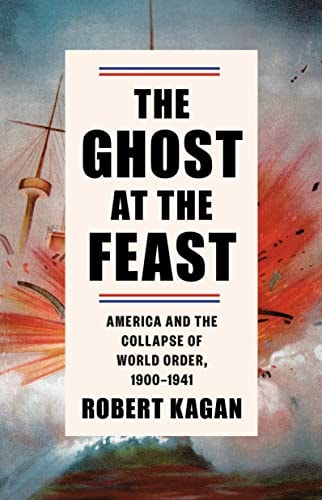
The Ghost at the Feast: America and the Collapse of World Order, 1900-1941
0
0
As an Amazon Associate and affiliate partner, Menrva Books earns from qualifying purchases. Learn more
Author Description
AN NPR BEST BOOK OF THE YEAR • A comprehensive, sweeping history of America’s rise to global superpower—from the Spanish-American War to World War II—by the acclaimed author of Dangerous Nation “With extraordinary range and research, Robert Kagan has illuminated America’s quest to reconcile its new power with its historical purpose in world order in the early twentieth century.” —Dr. Henry Kissinger At the dawn of the twentieth century, the United States was one of the world’s richest, most populous, most technologically advanced nations. It was also a nation divided along numerous fault lines, with conflicting aspirations and concerns pulling it in different directions. And it was a nation unsure about the role it wanted to play in the world, if any. Americans were the beneficiaries of a global order they had no responsibility for maintaining. Many preferred to avoid being drawn into what seemed an ever more competitive, conflictual, and militarized international environment. However, many also were eager to see the United States taking a share of international responsibility, working with others to preserve peace and advance civilization. The story of American foreign policy in the first four decades of the twentieth century is about the effort to do both—“to adjust the nation to its new position without sacrificing the principles developed in the past,” as one contemporary put it. This would prove a difficult task. The collapse of British naval power, combined with the rise of Germany and Japan, suddenly placed the United States in a pivotal position. American military power helped defeat Germany in the First World War, and the peace that followed was significantly shaped by a U.S. president. But Americans recoiled from their deep involvement in world affairs, and for the next two decades, they sat by as fascism and tyranny spread unchecked, ultimately causing the liberal world order to fall apart. America’s resulting interventi
Menrva's Summary
THE THESIS
The United States grappled with its ascendant global power and the ensuing collapse of the international order in the first half of the twentieth century.
Robert Kagan, author of Dangerous Nation, examines America's complex journey from a nation hesitant to engage in global affairs to a pivotal player on the world stage. The book details the internal conflicts and external pressures that shaped U.S. foreign policy between the Spanish-American War and the eve of World War II. It explores the nation's struggle to reconcile its growing power with its founding principles, particularly in the face of declining British naval strength and the rise of Germany and Japan. The narrative highlights America's significant role in World War I and its subsequent withdrawal from international responsibilities, which allowed for the spread of tyranny and the eventual breakdown of the liberal world order.
THE SCOPE MAP
- A detailed account of American foreign policy from 1900 to 1941.
- Analysis of the shifting global power dynamics, including the decline of British power and the rise of Germany and Japan.
- Exploration of the internal debates within the U.S. regarding its role in international affairs.
- The impact of American involvement and subsequent withdrawal from World War I on global stability.
- An examination of the interwar period and the rise of fascism and tyranny.
- The book's central argument on America's effort to adjust to its new global position without sacrificing its core principles.
THE AUTHORITY PERSPECTIVE
The book has been recognized as an NPR Best Book of the Year, with praise for its sweeping scope and research. Critics like Dr. Henry Kissinger have lauded Kagan's illumination of America's quest to reconcile its power with its purpose in world order. The work is noted for its comprehensive analysis of the early twentieth-century international landscape and America's evolving role within it. The reception highlights the book's detailed examination of the complex factors leading to the collapse of the liberal world order.
Page Count:
688
Publication Date:
2023-01-10
Publisher:
Knopf Doubleday Publishing Group
ISBN-10:
0307262944
ISBN-13:
9780307262943
Non-Fiction
History
American History
International relations
Geopolitics
Community Tags
Similar Books














