Partisan Warfare 1941–45
0
0
As an Amazon Associate and affiliate partner, Menrva Books earns from qualifying purchases. Learn more
Author Description
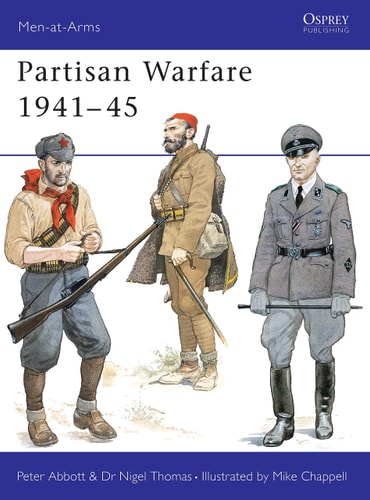
During 1941 the Germans occupied first Greece and the former Yuogslavia, then enormous areas of European Russia. Once the front line troops had moved on the struggle continued as bands of resistance fighters waged war against the occupation forces until their final withdrawal. The term 'partisan' is associated with Communist-led bands and they were often the most fanatical defenders of the Soviet realm. However, there were also non-Communist resistance groups which were nationalist and broadly constitutionalist and as a result a complicated three-way war developed. This book details the guerrilla war which was waged in the various regions and the uniforms and equipment of the combatants.
Menrva's Summary
THE THESIS
This book investigates the nature and impact of partisan warfare in Europe during the latter half of World War II, focusing on the period between 1941 and 1945. It examines the complex dynamics of resistance movements in occupied territories, particularly in Greece, Yugoslavia, and the Soviet Union, detailing the evolution of these conflicts from initial occupation to final withdrawal. The work highlights the ideological divisions within resistance groups, distinguishing between Communist-led partisans and non-Communist nationalist factions, and analyzes the resulting multi-faceted guerrilla campaigns.
THE SCOPE MAP
- Detailed accounts of partisan activities in Greece, Yugoslavia, and European Russia between 1941 and 1945.
- Analysis of the ideological differences and conflicts between Communist and non-Communist resistance groups.
- Examination of the uniforms and equipment used by both partisan fighters and occupation forces.
- Exploration of the three-way war that developed in some occupied regions, involving resistance groups and occupying powers.
THE AUTHORITY PERSPECTIVE
This book is recognized for its detailed examination of partisan warfare during a critical period of World War II. The authors' focus on the specific regions of Greece, Yugoslavia, and the Soviet Union provides a granular view of the resistance efforts. Its analysis of the ideological splits within the partisan movements offers a nuanced understanding of the complex conflicts that unfolded.
Page Count:
48
Publication Date:
2010-02-09
Publisher:
Bloomsbury USA
ISBN-10:
0850455138
ISBN-13:
9780850455137
History
Non-Fiction
Military History
Community Tags
Similar Books