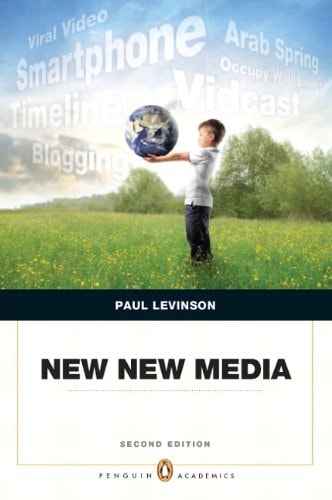
New New Media
0
0
As an Amazon Associate and affiliate partner, Menrva Books earns from qualifying purchases. Learn more
Author Description
ALERT: Before you purchase, check with your instructor or review your course syllabus to ensure that you select the correct ISBN. Several versions of Pearson's MyLab & Mastering products exist for each title, including customized versions for individual schools, and registrations are not transferable. In addition, you may need a CourseID, provided by your instructor, to register for and use Pearson's MyLab & Mastering products.PackagesAccess codes for Pearson's MyLab & Mastering products may not be included when purchasing or renting from companies other than Pearson; check with the seller before completing your purchase.Used or rental booksIf you rent or purchase a used book with an access code, the access code may have been redeemed previously and you may have to purchase a new access code.Access codesAccess codes that are purchased from sellers other than Pearson carry a higher risk of being either the wrong ISBN or a previously redeemed code. Check with the seller prior to purchase.--Discusses how “new new media” are transforming our cultureFacebook, Twitter, YouTube, Wikipedia, Foursquare, blogging … these and other “new new media“ are used by hundreds of millions worldwide and are transforming just about every aspect of our culture from the way we elect presidents to how we watch television. New New Media details the benefits, opportunities, and dangers of these transformations.New new media, as opposed to the traditional “new media” of email and websites, allow and encourage all consumers to become producers, readers to become writers and publishers, viewers to become performers - and have engendered such worldwide movements as The Arab Spring, The Tea Party, and Occupy Wall Street. This catalytic feature of contemporary media prompts an entirely new look at how mass media, culture, and industry are undergoing the most profound changes since the advent of the alphabet and the printing press.Learning GoalsUpon completing this book, readers will be able to: Dis
Menrva's Summary
THE THESIS
How do the interactive capabilities of contemporary digital platforms fundamentally reshape the relationship between media producers and consumers? Paul Levinson, a professor of communication and media studies, examines the transition from traditional "new media" to "new new media," arguing that the shift toward user-generated content and participatory platforms represents a historical turning point comparable to the invention of the printing press. The text utilizes a framework of media ecology to analyze how these tools influence political movements, industrial structures, and individual expression.
THE SCOPE MAP
What You Will Find
- Analysis of the shift from passive consumption to active production in digital spaces.
- Case studies of global movements including the Arab Spring and Occupy Wall Street.
- Examination of the impact of social media on political elections and television consumption.
- Theoretical discussion on the evolution of media from the alphabet to modern blogging and micro-blogging.
THE AUTHORITY PERSPECTIVE
The subject matter points to a comprehensive academic introduction to the social and political implications of the digital age. The framing suggests a text designed for undergraduate students and researchers seeking to understand the structural changes brought about by participatory media platforms.
Page Count:
240
Publication Date:
2012-08-18
Publisher:
Pearson
ISBN-10:
0205912141
ISBN-13:
9780205912148
Media Studies
Communication Studies
Technology
Sociology
Computer Network Resources
Social Media
Community Tags
Similar Books