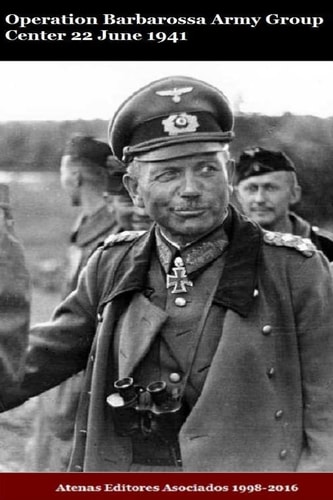
Operation Barbarossa: Army Group Center, 22 June 1941
0
0
As an Amazon Associate and affiliate partner, Menrva Books earns from qualifying purchases. Learn more
Author Description
At the beginning of May 1933, the new National Socialist Government made its first attempt to come to an understanding with Poland. But from the very outset it left no doubt that the permanent preservation of peace between the two nations was unthinkable as long as the Versailles boundaries were retained. Also, it refused to recognize that Poland had a special right to Danzig. Nevertheless, in spite of all this, negotiations between the two countries led, on January 26, 1934, to a declaration that in the future they would under no circumstances use force for the settlement of any future disputes (G 37). However, in spite of this agreement, German-Polish relations remained more or less the same as before. On November 5, 1937, Germany and Poland concluded a new agreement for the mutual protection of minorities. But the expected improvement in the condition of the German communities in Poland still failed to take place, and unemployment, especially among the youth, steadily increased. The Germans felt this to be especially hard, since in the Reich Hitler had managed within a few years to put an end to unemployment. The situation in Danzig demands special consideration. Under the Versailles Treaty, Danzig and its immediate vicinity had been separated from Germany and made into a "Free City" and its external political relations placed under a League of Nations Commissioner. Poland was given certain special economic and transport privileges, while on the Westerplatte, an island at the mouth of the Vistula, she had the right to maintain a fixed number of troops for the protection of a munitions depot. An economic agreement between Danzig and Poland, signed in August 1933, if loyally carried out, might have brought about a lessening of the friction. But the Polish Government, besides building up the purely Polish port of Gdynia, held fast to its expansionist policy toward Danzig, and tried by unjustified tariff policies to deflect commerce from the Free City. Polish propaga
Menrva's Summary
THE THESIS
This book investigates the initial stages and strategic objectives of Operation Barbarossa, focusing on the German Army Group Center's advance into the Soviet Union on June 22, 1941. It details the complex geopolitical landscape leading up to the invasion, including the strained German-Polish relations and the establishment of the Free City of Danzig. The text examines the military planning and the initial thrust of the German forces, highlighting the challenges and ambitions driving this pivotal campaign.
THE SCOPE MAP
- The geopolitical context of German-Polish relations leading up to World War II.
- The strategic importance and status of the Free City of Danzig.
- Details of Operation Barbarossa, specifically the role of Army Group Center.
- The initial military objectives and movements of German forces on June 22, 1941.
- Analysis of the early phases of the Eastern Front campaign.
THE AUTHORITY PERSPECTIVE
This work appears to offer a detailed historical account of a specific military operation during World War II. The subject matter suggests a focus on strategic planning, troop movements, and the historical context of the German invasion of the Soviet Union. The inclusion of details about pre-war German-Polish relations and the status of Danzig indicates a comprehensive approach to understanding the origins and initial execution of the offensive.
Page Count:
732
Publication Date:
1999-10-08
Publisher:
CreateSpace Independent Publishing Platform
ISBN-10:
1536815829
ISBN-13:
9781536815825
History
Non-Fiction
Military History
Community Tags
Similar Books