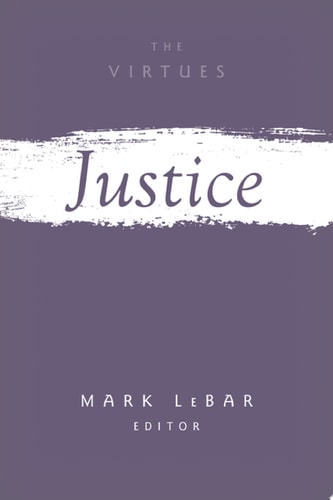
Justice
0
0
As an Amazon Associate and affiliate partner, Menrva Books earns from qualifying purchases. Learn more
Author Description
A Blindfolded Woman Holding A Balance And A Sword Personifies One Of Our Most Significant Virtues. We Find Lady Justice In Statues And Paintings That Adorn Courts And Other Institutions Of Law, Symbolizing Strength And Impartiality. Yet Why Do We Valorize This Virtue Primarily As A Quality Of Societies, And Secondly As One Of Individual Character? We Can Trace The Virtue Of Justice To Ancient Greece, Where Virtue Ethics Began Its Long Evolution. There Justice Was Seen As One Of The Most Prominent Virtues - And Arguably The Most Important Of The Social Virtues. With Time, Political Philosophy Diverted Focus To Understanding Justice As A Property Of Societies, And Discussion Of Justice As A Virtue Of Individuals Diminished. But Justice As A Virtue Of Individual Character Has, Along With The Other Virtues, Reasserted Itself Not Only In Philosophy But In Social Psychology And Other Empirical Fields Of Study. This Volume Aims To Demonstrate The Breadth Of That Thinking And Research. It Comprises New Essays Solicited From Philosophers And Political Theorists, Psychologists, Economists, Biologists, And Legal Scholars. Each Contribution Focuses On Some Aspect Of What Makes People Just, Either By Examining The Science That Explains The Development Of Justice As A Virtue, By Highlighting Virtue Cultivation Within Distinctive Traditions Of Empirical Or Philosophical Thought, Or By Adopting A Distinctive Perspective On Justice As An Individual Trait. As The Volume Shows, Justice Begins With The Individual, And Flows Outward To Make Just Laws And Just Societies.
Menrva's Summary
THE THESIS
This volume investigates why modern discourse prioritizes justice as a societal property over its historical roots as a fundamental virtue of individual character. Mark LeBar, a scholar of virtue ethics, curates a collection of essays that bridge the gap between ancient philosophical traditions and contemporary empirical research. The work argues that understanding justice requires a return to the individual, positing that just societies are the outward manifestation of cultivated individual character.
THE SCOPE MAP
What You Will Find
- Interdisciplinary analysis from philosophers, political theorists, psychologists, economists, and biologists
- Examination of the developmental science behind justice as a personal trait
- Comparative studies of virtue cultivation across different intellectual traditions
Scope Limits
- Does not provide a comprehensive history of legal systems or judicial institutions
- Does not offer a prescriptive manual for public policy reform
THE AUTHORITY PERSPECTIVE
Experts recognize this volume as a significant contribution to the revival of virtue ethics within interdisciplinary academic circles. Scholars frequently note the text's success in synthesizing diverse empirical data with classical philosophical frameworks to provide a cohesive argument for individual moral agency.
Page Count:
248
Publication Date:
2018-01-01
Publisher:
Oxford University Press
ISBN-10:
0190631767
ISBN-13:
9780190631765
Non-Fiction
Philosophy
Ethics
Legal Theory
Community Tags
Similar Books