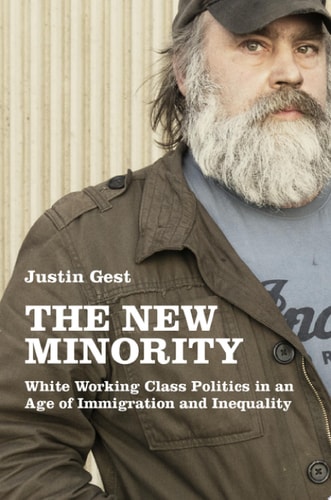
The New Minority
0
0
As an Amazon Associate and affiliate partner, Menrva Books earns from qualifying purchases. Learn more
Author Description
It Wasn't So Long Ago That The White Working Class Occupied The Middle Of British And American Societies. But Today Members Of The Same Demographic, Feeling Silenced And Ignored By Mainstream Parties, Have Moved To The Political Margins. In The United States And The United Kingdom, Economic Disenfranchisement, Nativist Sentiments And Fear Of The Unknown Among This Group Have Even Inspired The Creation Of New Right-wing Parties And Resulted In A Remarkable Level Of Support For Fringe Political Candidates, Most Notably Donald Trump. Answers To The Question Of How To Rebuild Centrist Coalitions In Both The U.s. And U.k. Have Become Increasingly Elusive. How Did A Group Of People Synonymous With Middle Britain And Middle America Drift To The Ends Of The Political Spectrum? What Drives Their Emerging Radicalism? And What Could Possibly Lead A Group With Such Enduring Numerical Power To, In Many Instances, Consider Themselves A Minority In The Countries They Once Defined? In The New Minority, Justin Gest Speaks To People Living In Once Thriving Working Class Cities--youngstown, Ohio And Dagenham, England--to Arrive At A Nuanced Understanding Of Their Political Attitudes And Behaviors. In This Daring And Compelling Book, He Makes The Case That Tension Between The Vestiges Of White Working Class Power And Its Perceived Loss Have Produced The Unique Phenomenon Of White Working Class Radicalization.
Menrva's Summary
THE THESIS
How did the white working class in the United States and the United Kingdom transition from a central societal pillar to a demographic that perceives itself as a marginalized minority? Justin Gest, a professor of public policy, investigates the socio-economic factors driving this shift by analyzing the intersection of economic disenfranchisement, nativist sentiment, and political alienation. He argues that the tension between historical power and the perception of its loss has catalyzed a unique form of radicalization within these populations.
THE SCOPE MAP
What You Will Find
- Comparative analysis of working-class political attitudes in Youngstown, Ohio, and Dagenham, England.
- Qualitative data derived from direct interviews with residents in post-industrial cities.
- A framework for understanding the rise of right-wing populism and support for fringe political candidates.
Scope Limits
- The study focuses specifically on white working-class populations and does not provide a comprehensive analysis of all demographic groups affected by economic shifts.
- The research is bounded by the political climate leading up to the rise of figures like Donald Trump and does not cover subsequent political developments.
THE AUTHORITY PERSPECTIVE
Scholars and political analysts frequently cite this work as a significant contribution to understanding the psychological and economic drivers of modern populism. Readers often note the academic rigor of the author's fieldwork while appreciating the clarity with which he presents complex sociological trends.
Page Count:
272
Publication Date:
2016-01-01
Publisher:
Oxford University Press
ISBN-10:
0190632569
ISBN-13:
9780190632564
Working class
Sociology
United States
United Kingdom
Contemporary History