Eugenio Faludi's Montecatini Summer Village in Cervia 1936-1938
0
0
As an Amazon Associate and affiliate partner, Menrva Books earns from qualifying purchases. Learn more
Author Description
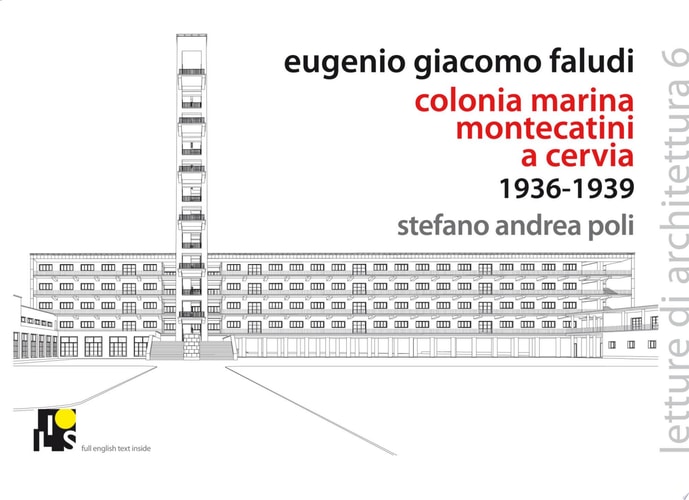
The particular type of "Seaside holiday camp" is a good sample of how the architectural research can solve problems. From 1930 to 1960 this new type is created and declined by Italian architects because many industries wanted to solve the problems of youth sickness of their worker's son. The best solution was to offer a summer period to spend in special buildings near the sea. Here child could have physical activity and have a special experience together with others. These buildings had to solve problems connected to sleeping, physical activity, free time and other normally not joined together in one building. Stefano Poli's book investigate one of the less known buildings of a quite unknown architect whose only problem was to be a Jew in a racist country. For the first time a yet existing building is completely told and drawn revealing the elegance and the architectural criteria of an important but unlucky architect.
Menrva's Summary
THE THESIS
This book investigates the architectural design and social context of Eugenio Faludi's Montecatini Summer Village in Cervia, built between 1936 and 1938. The work examines the
THE SCOPE MAP
- The historical context of "Seaside holiday camps" in Italy from 1930-1960.
- The specific architectural challenges and solutions for designing buildings for youth health and recreation.
- Detailed analysis and drawings of Eugenio Faludi's Montecatini Summer Village.
- The life and work of Eugenio Faludi, an architect facing persecution as a Jew in Fascist Italy.
- The social and industrial motivations behind the creation of such holiday camps.
THE AUTHORITY PERSPECTIVE
The book offers a detailed examination of a specific architectural project and its historical context. It highlights the innovative solutions employed in the design of the Montecatini Summer Village, addressing the needs of children's health and recreation. The work also sheds light on the personal and professional challenges faced by the architect, Eugenio Faludi, due to the political climate of the time. The detailed drawings and analysis provide valuable insight into an important, yet lesser-known, piece of architectural history.
Page Count:
112
Publication Date:
2013-01-01
Publisher:
Ilios Editore
ISBN-10:
8890802405
ISBN-13:
9788890802409
Architecture
History
Non-Fiction
Social History
Community Tags
Similar Books