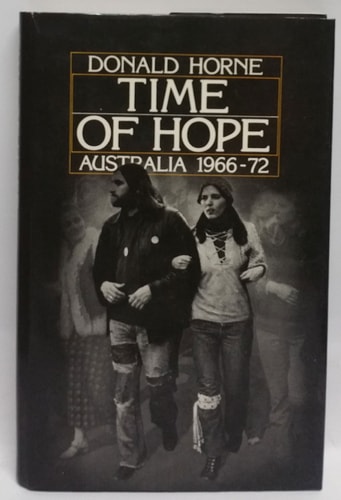
Time of Hope: Australia, 1966-72
0
0
As an Amazon Associate and affiliate partner, Menrva Books earns from qualifying purchases. Learn more
Author Description
100,000 people take to Melbourne's streets in peaceful protest...the public joins the cast on stage to sing 'Let the Sunshine in'...a senior Australian politician sits down in the Great Hall of the People to chat with Chou En-lai...an Australian woman writes a book that changes lives throughout the world - it all happened between 1966 and 1972, a time that was, for many, a time of hope.When Sir Robert Menzies retired in 1966, the future of Australia seemed certain - it would go on forever as a white, anglo-saxon, primarily protestant, male-dominated, politically apathetic country, committed to 'progress through economic development'.By 1972, and the beginning of the terms of the first Labor government in 23 years, Australia had seen an Aboriginal embassy on the lawns of parliament house; the emergence of a vision of a 'multicultural future for Australia; the pope holding mass at Randwick racecourse; Germaine Greer; 'sit-ins'; 'freedom rides'; 'gay lib'; 'student power'; 'school power'; 'flower power' and 'green bans'.Things had certainly changed. Those who approved the changes saw them as the light at the end of the tunnel; those who didn't saw them as the harbingers of doom. But how and why had the changes occurred? Had Australia just sopped up new ideas overflowing from the United States and elsewhere? Had the three interregnum prime ministers led us towards the new Australia or had they themselves been pushed reluctantly along by the pressure of events and new ideas?Donald Horne examines those times and the questions they pose with the liveliness and insight for which he is renowned and, in doing so, gives us not only a valuable work of social history, but also a vivid re-creation of an unforgettable era.
Menrva's Summary
THE THESIS
Donald Horne investigates the rapid and profound social, cultural, and political transformation of Australia between 1966 and 1972, questioning whether these shifts were organic developments or external influences. Horne, a prominent social critic and author, utilizes a blend of political analysis and cultural observation to examine how a nation transitioned from the rigid, conservative era of Sir Robert Menzies to the more pluralistic, activist climate that preceded the 1972 Labor government. He evaluates the roles of leadership, public protest, and international ideological currents in shaping this pivotal period of national identity.
THE SCOPE MAP
What You Will Find
- Analysis of the transition from the Menzies era to the Whitlam-era Labor government.
- Examination of grassroots movements including Aboriginal rights, student activism, and environmentalism.
- Discussion of the influence of international cultural shifts on Australian domestic policy.
- Evaluation of the role of political leadership in responding to or resisting social change.
THE AUTHORITY PERSPECTIVE
This work is regarded as a significant contribution to Australian social history, noted for its sharp analytical focus and accessible narrative style. The text provides a dense, well-documented account of a transformative era, serving as a primary resource for understanding the roots of modern Australian political culture.
Page Count:
186
Publication Date:
1980-01-01
Publisher:
Angus & Robertson
ISBN-10:
0207141339
ISBN-13:
9780207141331
History
Social History
Political History
Australian History
20th Century
Australia
Community Tags
Similar Books