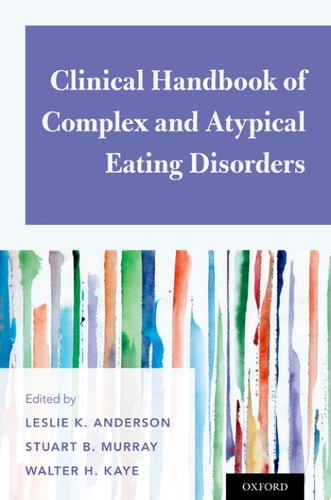
Clinical Handbook of Complex and Atypical Eating Disorders
0
0
As an Amazon Associate and affiliate partner, Menrva Books earns from qualifying purchases. Learn more
Author Description
Treating patients with eating disorders (ED) is a notoriously challenging undertaking. Patients tend to be medically compromised and have a deep ambivalence towards their symptoms, and treatment dropout and relapse rates are high. Further complicating matters, a sizable number of patients present with additional characteristics that set them apart from the patients for whom empirically supported treatments were developed. Up to 50% of current ED diagnoses are classified as atypical and do not fit into existing diagnostic categories, and many more present with complex comorbidities.Clinical Handbook of Complex and Atypical Eating Disorders brings together into one comprehensive resource what is known about an array of complicating factors for patients with ED, serving as an accessible introduction to each of the comorbidities and symptom presentations highlighted in the volume. The first section of the book focuses on the treatment of ED in the presence of various comorbidities, and the second section explores the treatment of ED with atypical symptom presentations. The third section focuses on how to adapt ED treatments for diverse populations typically neglected in controlled treatment trials: LGBT, pediatric, male, ethnically diverse, and older adult populations. Each chapter includes a review of clinical presentation, prevalence, treatment approaches, resources, conclusions, and future directions. Cutting edge and practical, Clinical Handbook of Complex and Atypical Eating Disorders will appeal to researchers and health professionals involved in treating ED.
Menrva's Summary
THE THESIS
How can clinicians effectively treat patients whose eating disorder presentations fall outside standard diagnostic criteria or involve complex comorbidities? The authors, Leslie K. Anderson, Stuart B. Murray, and Walter H. Kaye, leverage their extensive clinical and research expertise to address the limitations of traditional, empirically supported treatments. They provide a structured framework for adapting therapeutic interventions to meet the needs of patients who are medically compromised or belong to historically underrepresented populations.
THE SCOPE MAP
What You Will Find
- Clinical strategies for managing eating disorders alongside complex psychiatric comorbidities.
- Methodologies for addressing atypical symptom presentations that do not align with standard diagnostic categories.
- Adaptations of treatment protocols for diverse populations including LGBT, pediatric, male, and older adult groups.
- Structured chapter reviews covering clinical presentation, prevalence, and future research directions.
Scope Limits
- This text does not serve as a primary diagnostic manual for standard eating disorders.
- It does not provide exhaustive longitudinal data on long-term recovery outcomes for every specific comorbidity mentioned.
THE AUTHORITY PERSPECTIVE
Clinicians and researchers identify this volume as a practical resource for navigating the complexities of modern eating disorder treatment. Experts highlight the book's utility in bridging the gap between standardized clinical trials and the nuanced realities of diverse patient populations.
Page Count:
440
Publication Date:
2017-09-26
Publisher:
Oxford University Press
ISBN-10:
019063040X
ISBN-13:
9780190630409
Psychology
Psychiatry
Medical
Mental Health