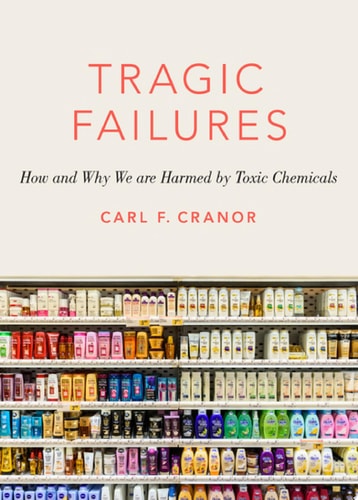
Tragic Failures: How and Why We are Harmed by Toxic Chemicals
0
0
As an Amazon Associate and affiliate partner, Menrva Books earns from qualifying purchases. Learn more
Author Description
The world is awash in chemicals created by fellow citizens, but we know little to nothing about them. Understanding whether even the most prevalent ones are toxic would take decades. Many people have tragically suffered serious diseases and premature death, including children during development. Why has this occurred? Many factors contribute, but two important ones are the laws permitting this and the manner in which science has been used to identify and assess whether or not products are toxic. Both are the outcome of legislative, corporate, and judicial choices. Congress created laws that in fact keep public health officials and the wider population in the dark about the toxicity of virtually all substances other than prescription drugs and pesticides. Facing considerable ignorance about toxic substances, impartially motivated scientists seeking to protect the public health are constrained by the natural pace of studies to reveal toxic effects. Corporate pressures on public health officials and scientific obstruction substantially heighten the barriers to protecting the public. When people have suffered serious as well as life-threatening diseases likely traceable to toxic substances, judicial errors barring relevant science in the personal injury (tort) law can and have frustrated redress of injustices. Under both public health law and the tort law, there are possibilities for improved approaches, provided public leaders make different and better choices. This book describes these issues and suggests how we could be better protected from myriad toxic substances in our midst.
Menrva's Summary
THE THESIS
This book investigates the systemic failures in legislative, corporate, and judicial frameworks that allow toxic chemicals to proliferate while hindering public health protections. Carl F. Cranor, a distinguished professor of philosophy and expert in toxic substances, utilizes his background in legal and ethical analysis to examine how current laws keep the public uninformed. He argues that the intersection of corporate influence, scientific obstruction, and restrictive judicial standards creates a dangerous environment where public health is consistently deprioritized. The text provides a critical assessment of how these institutional choices contribute to preventable diseases and premature deaths.
THE SCOPE MAP
What You Will Find
- Analysis of legislative gaps in chemical regulation excluding drugs and pesticides
- Examination of corporate influence on public health policy
- Discussion of judicial errors in tort law regarding scientific evidence
- Proposed policy reforms for improved public protection
Scope Limits
- Does not provide a comprehensive toxicology report on specific individual chemicals
- Does not focus on international regulatory bodies outside of the United States context
THE AUTHORITY PERSPECTIVE
Experts and legal scholars recognize this work as a significant critique of the intersection between environmental law and public health policy. Readers frequently note the academic density of the prose, which is well-suited for those interested in the structural barriers to chemical safety regulation.
Page Count:
264
Publication Date:
2017-01-01
Publisher:
Oxford University Press
ISBN-10:
0190635770
ISBN-13:
9780190635770
Non-Fiction
Philosophy
Toxicological Chemistry
Toxicology
Science Policy
Allied Health
Medical
Public Policy
United States
Health Policy
Public Health
Law and ethics
Community Tags
Similar Books