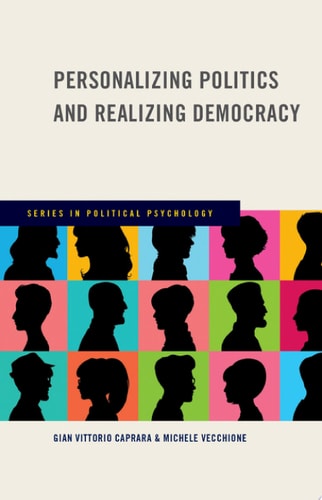
Personalizing Politics and Realizing Democracy
0
0
As an Amazon Associate and affiliate partner, Menrva Books earns from qualifying purchases. Learn more
Author Description
Few People Today Would Challenge The Legitimacy Of Democracy As The Form Of Government Most Congenial To Modern-day Citizenship, As It Requires Its Members To Treat Each Other As Equals And To Cooperate In The Shared Pursuit Of Conditions That Maximize Both The Individual's Potential And The Achievement Of A Public Welfare. However, A Number Of Facts Challenge These Deeply-rooted Ideals: Declining Political Participation, Along With Skepticism And Dissatisfaction With The Function Of Democracy Has Spread; Citizens' Increasing Capacity To Control Their Own Circumstances Within Their Private, Economic, And Social Spheres Is At Odds With Their Inability To Exert Control Over Their Elected Representatives; And The Shift Of Opposing Radical Coalitions Towards More Pragmatic And Ideologically Elusive Platforms Aimed To Attract A Larger Constituency Of The Electorate Has Greatly Diluted The Identity Of Political Parties. In Personalizing Politics And Realizing Democracy, Authors Gian Vittorio Caprara And Michele Vecchione Present The Ever-growing Reciprocal Relationship Between Personality And Politics, And Assert That Politics Are Not Only Increasingly Dependent On The Likes And Dislikes Of Its Citizenship, But Ultimately On The Personalities Of Political Candidates Attracting These Voters' Preferences. In This Book, Caprara And Vecchione Draw From Recent Research In Personality Psychology That Offer A Decisive Role In Understanding The Major Changes That Have Occurred Within Politics In The Last Several Decades.
Menrva's Summary
THE THESIS
This book investigates the growing influence of individual personality traits on political behavior and the subsequent impact on the functionality of modern democratic systems. Authors Gian Vittorio Caprara and Michele Vecchione, both established researchers in personality psychology, utilize empirical data to argue that the personalization of politics has fundamentally altered how citizens interact with candidates and institutions. They contend that the shift toward candidate-centered politics reflects a broader psychological trend where personal preferences increasingly dictate political outcomes, often at the expense of traditional party-based ideologies.
THE SCOPE MAP
What You Will Find
- Analysis of the reciprocal relationship between individual personality profiles and political candidate selection.
- Examination of the decline in traditional political participation and party identity.
- Application of personality psychology frameworks to understand contemporary voter dissatisfaction.
Scope Limits
- The text does not provide a comprehensive history of global democratic institutions.
- It focuses primarily on psychological drivers rather than structural or economic policy analysis.
THE AUTHORITY PERSPECTIVE
Experts recognize this work as a significant contribution to the field of political psychology, particularly for its focus on the intersection of individual temperament and electoral outcomes. Readers frequently note the academic density of the prose, which is best suited for students and researchers interested in the behavioral foundations of modern governance.
Page Count:
248
Publication Date:
2017-01-01
Publisher:
Oxford University Press
ISBN-10:
0190644273
ISBN-13:
9780190644277
Psychology
Sociology
Democracy
Political Psychology
Community Tags
Similar Books