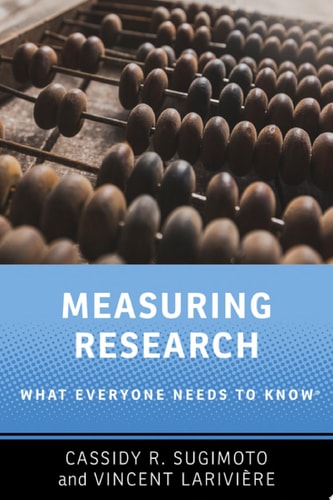
Measuring Research
0
0
As an Amazon Associate and affiliate partner, Menrva Books earns from qualifying purchases. Learn more
Author Description
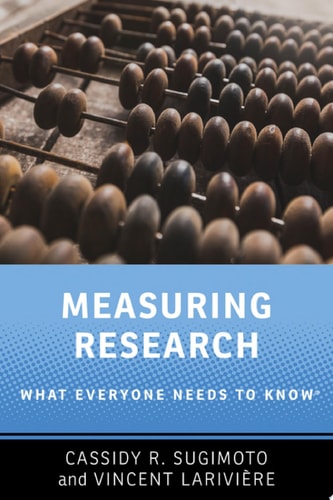
Policy Makers, Academic Administrators, Scholars, And Members Of The Public Are Clamoring For Indicators Of The Value And Reach Of Research. The Question Of How To Quantify The Impact And Importance Of Research And Scholarly Output, From The Publication Of Books And Journal Articles To The Indexing Of Citations And Tweets, Is A Critical One In Predicting Innovation, And In Deciding What Sorts Of Research Is Supported And Whom Is Hired To Carry It Out. There Is A Wide Set Of Data And Tools Available For Measuring Research, But They Are Often Used In Crude Ways, And Each Have Their Own Limitations And Internal Logics. Measuring Research: What Everyone Needs To Know® Will Provide, For The First Time, An Accessible Account Of The Methods Used To Gather And Analyze Data On Research Output And Impact. Following A Brief History Of Scholarly Communication And Its Measurement -- From Traditional Peer Review To Crowdsourced Review On The Social Web -- The Book Will Look At The Classification Of Knowledge And Academic Disciplines, The Differences Between Citations And References, The Role Of Peer Review, National Research Evaluation Exercises, The Tools Used To Measure Research, The Many Different Types Of Measurement Indicators, And How To Measure Interdisciplinarity. The Book Also Addresses Emerging Issues Within Scholarly Communication, Including Whether Or Not Measurement Promotes A Publish Or Perish Culture, Fraud In Research, Or Citation Cartels. It Will Also Look At The Stakeholders Behind These Analytical Tools, The Adverse Effects Of These Quantifications, And The Future Of Research Measurement.
Menrva's Summary
THE THESIS
This book investigates the methodologies, limitations, and societal implications of quantifying scholarly impact and research output. Authors Cassidy R. Sugimoto and Vincent Larivière, both established scholars in the field of information science and bibliometrics, synthesize complex data sets to provide a framework for understanding how research value is assessed. They argue that while indicators are necessary for policy and administrative decisions, their current application often lacks nuance and fails to account for the internal logic of different academic disciplines.
THE SCOPE MAP
What You Will Find
- A historical overview of scholarly communication from traditional peer review to social web metrics.
- Analysis of classification systems for knowledge and academic disciplines.
- Evaluation of tools and indicators used to measure research impact, including citation analysis and altmetrics.
- Discussion of systemic issues such as publish-or-perish culture, research fraud, and citation cartels.
Scope Limits
- The text does not provide a comprehensive technical manual for software implementation.
- It does not offer a singular, universal solution for all institutional evaluation needs.
THE AUTHORITY PERSPECTIVE
Experts in information science recognize this work as a foundational text for understanding the complexities of research evaluation. Readers frequently note the clarity with which the authors navigate dense technical subjects, making it an accessible resource for both administrators and scholars.
Page Count:
208
Publication Date:
2017-01-01
Publisher:
Oxford University Press
ISBN-10:
0190640138
ISBN-13:
9780190640132
Academic Research
Higher Education
Bibliometrics
Scientometrics
Information Science
Community Tags
Similar Books